
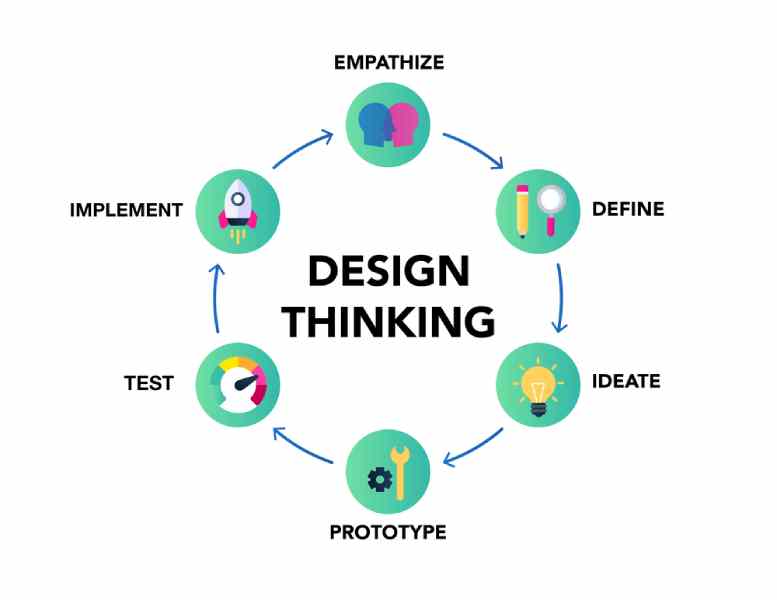
Design thinking is an approach to innovation that puts people first. It helps teams solve hard problems in new ways. You learn what users need. Then make ideas. Build quick models. Test them. Fix what is wrong. Repeat. This loop makes better products and services. Big companies like Apple and IBM use it. They make things users love. Design thinking mixes empathy, creativity, and tests. It works for business, schools, and more. Anyone can try it. No need to be a designer. It turns ideas into real wins.
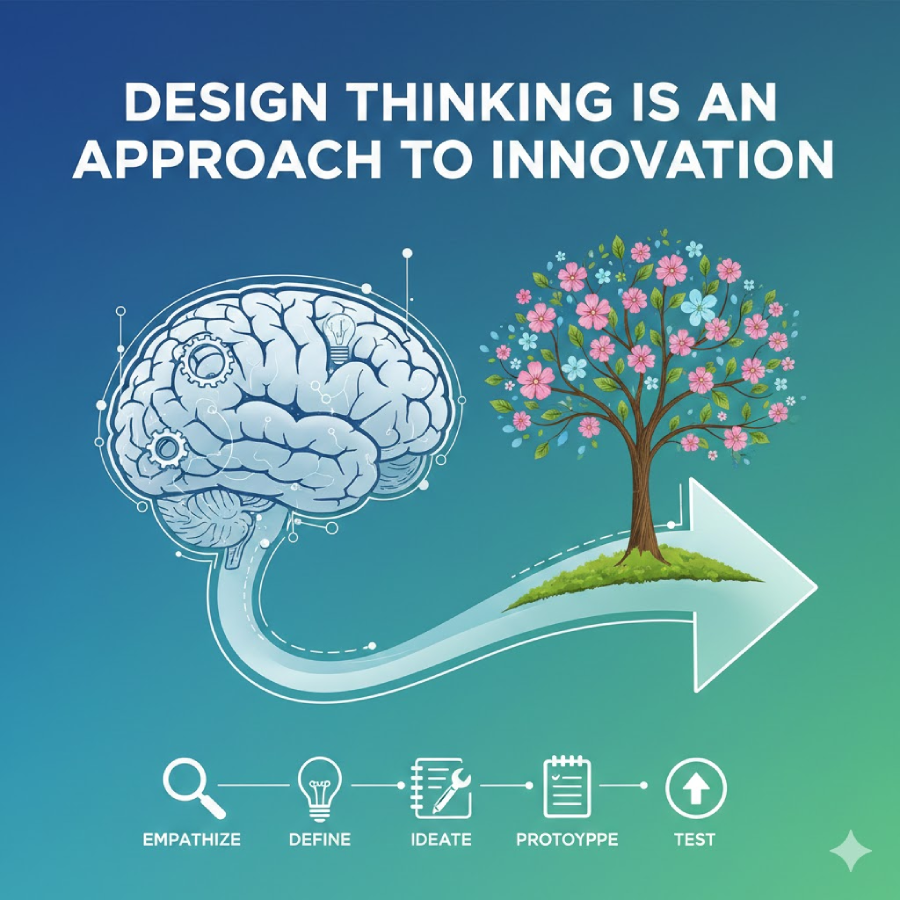
Design thinking is an approach to innovation
Design thinking is an approach to innovation because it focuses on humans. Tim Brown from IDEO says it mixes user needs, tech options, and business sense. It is not a straight line. You go back and forth. Learn as you go. This finds hidden needs. Make fresh solutions. Old ways guess what people want. Design thinking asks and watches. It uses empathy. Feel what users feel. Then define the real problem. Brainstorm lots of ideas. Pick best. Make simple prototypes. Test with real people. Change based on feedback. This cuts risk. Finds best fit fast. Human-centered design approach drives it. Innovation comes from real life. Not just lab ideas. It solves big issues. Like health or green tech. Teams from different jobs work together. Fresh views spark new things.
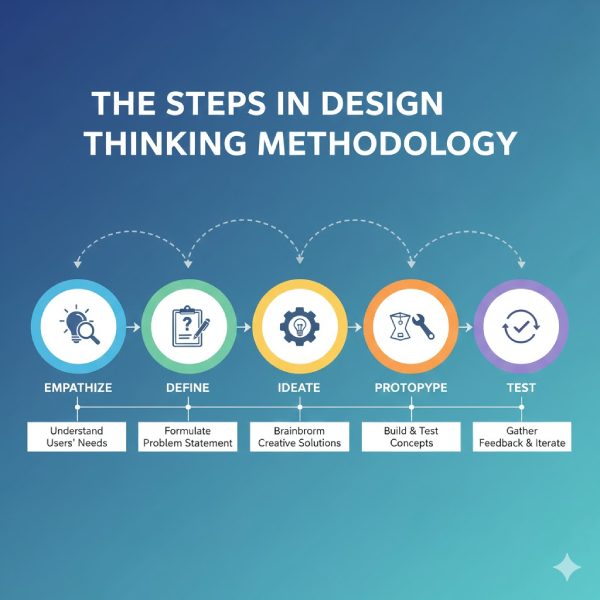
The Steps in Design thinking methodology
Design thinking methodology has five main steps. They are not always in order. You can loop back. First step: Empathize. Talk to users. Watch them. Use empathy maps. See what they say, think, feel, do. Second: Define. Make a clear problem note. Like “How might we help…”. Third: Ideate. Brainstorm wild ideas. No judgment yet. Use sticky notes. Fourth: Prototype. Build cheap models. Paper sketches or simple apps. Fifth: Test. Show to users. Get feedback. Fix and try again. Iterative problem solving is key. Fail fast to learn. Tools like journey maps help. Or “How Might We” questions. Steps make it easy for all. Teams stay on track. Find great answers.
Benefits of Innovation through design thinking
Innovation through design thinking brings many wins. First, user happy products. They fit real needs. Second, less waste. Test early. No big fails late. Third, team fun. Creative work boosts ideas. Fourth, stand out. Unique solutions beat rivals. Fifth, solve hard problems. Like climate or health. Sixth, fast change. Quick loops fit new trends. Seventh, more money. Better things sell good. Companies like Pepsi and SAP use it. Beat market scores. Creative problem solving techniques open minds. Break old habits. All can join. No expert need. Benefits grow culture. Teams bravely try new things. Long term strong.
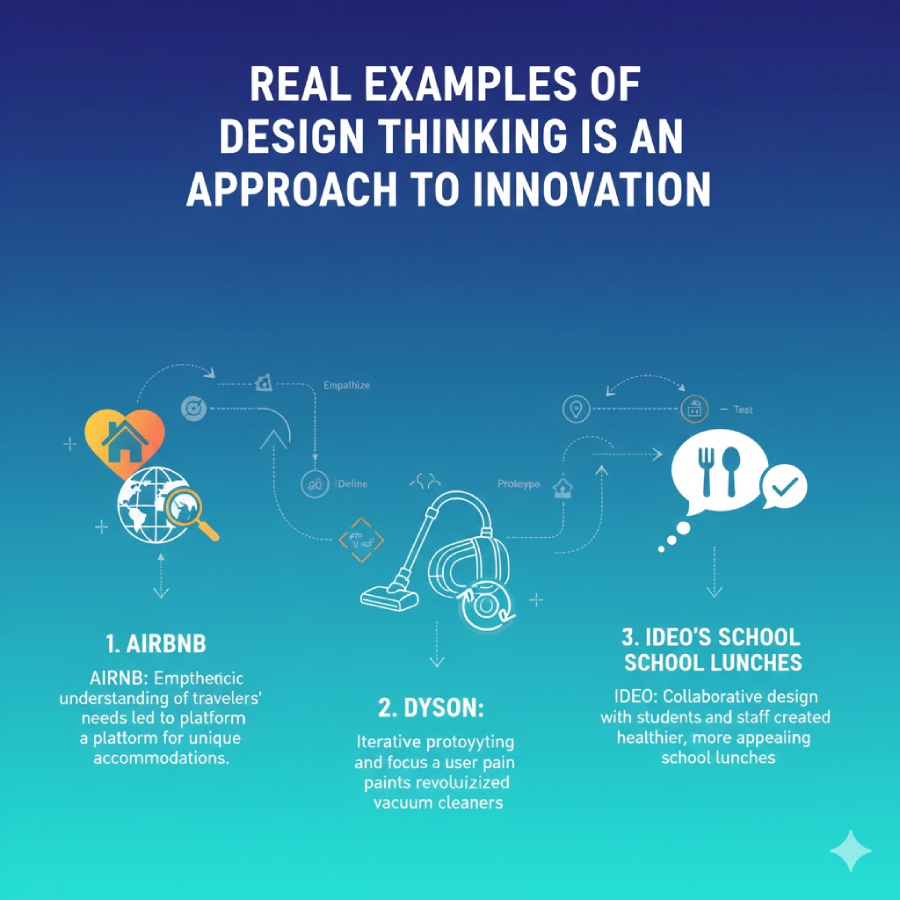
Real Examples of design thinking is an approach to innovation
Design thinking is an approach to innovation in real life. Airbnb used it early. Founders lived like hosts. Found trust issues. Added photos and reviews. Saved company. Grew big. PillPack made pill boxes easy. For old people. Amazon bought it for billions. IBM trains all staff. Shift to user focus. Made cloud tools better. Bank of America saw moms with kids. Made “Keep the Change”. Rounds up buys. Saves auto. Millions joined. User-centered innovation methods shine here. Find pain points. Fix simple. Big change. Schools use it too. Teach kids to solve local issues. Like clean water. It’s fun to learn.
How to Start Design thinking framework in Your Work
Start Design thinking framework small. Pick one problem. Get a team mix. Jobs are different. Follow these steps. Empathize first. Talk to five users. Note finds. Define clear. Ideate 100 ideas. No bad ones. Prototype top three. Paper or digital. Test with people. Ask what is good and bad. Fix quick. Try again. Tools free. Like Miro board. Or sticky notes. Books help. Like “Change by Design” by Tim Brown. Online courses IDEO U. Or Stanford d.school. Start fun. No perfect need. Learn by doing. Prototyping and testing solutions key. Shows what works. Builds confidence.
Common Mistakes in Human-centered design thinking
Human-centered design thinking has pitfalls. Skip empathy. Guess needs. Wrong start. Judge ideas early. Kill good ones. Make fancy prototypes too soon. The cost is high. No real test. Stick to one idea. No try others. Ignore feedback. Hurt feelings. Big teams are hard. Too much talk. No decision. Fix by rules. Defer judge in ideate. Low cost models. Open mind. Small groups first. Practice lots. Mistakes teach. Better next.
Frequently Asked Questions
Why is design thinking an approach to innovation?
Design thinking is an approach to innovation because it puts users first. Find real needs. Make creative fixes. Tests quick. Fixes wrong. Repeat for the best. Mix empathy ideas and build tests. Drives new products and services. Companies like Apple use it. Make loved things. Solves hard problems in a fresh way.
What are steps in Design thinking methodology?
Design thinking methodology has five steps. Empathize learning user needs. Define a clear problem. Ideate many ideas. Prototype simple models. Test to get feedback. Loop back fix. Not straight. Overlap ok. Learn each time.
How Innovation through design thinking helps business?
Innovation through design thinking helps businesses make users love products. Cut risk early test. Boost team creative. Stand out rivals. Solve big issues. Grow sales. Like Airbnb saved with user focus.
What is a Human-centered design approach?
Human-centered design approaches start with people. Understanding needs feelings and pain. No guesses. Use talks watch. Empathy maps. Make solutions fit real life. Core of design thinking.
Examples of Design thinking framework success?
Design thinking framework success like PillPack easy pills. Amazon bought big. Bank of America saves change round up. Millions use it. IBM trains all. Better tools.
Conclusion
Design thinking is an approach to innovation that changes how we solve problems. Human focus. Step loop. Real tests. Brings fresh wins. Try it for your work. See change.How will you use design thinking as an approach to innovation next? Tell us.
References
- Strategy insights at Creativity at Work: Design Thinking Strategy – benefits and examples.
- Framework overview at IDEO U: Design Thinking – modes and applications.
- Detailed topic guide at Interaction Design Foundation: Design Thinking – origins and process.