
Starting your investing journey can feel exciting yet scary. You want to grow your money but worry about mistakes. Good news: investment strategies for beginners make it simple. In 2025, with markets buzzing from AI and rate shifts, focus on basics like saving steady and spreading risk. No need for big bucks or fancy degrees. Just pick a plan that fits your life, like buying low-cost funds each month. This guide breaks it down step by step. You’ll learn safe ways to start, from stocks to crypto, all tailored for newbies like young pros or students with small savings. Let’s turn your spare cash into future wins.
Why Start Investing Now? The Basics for Newcomers
Investing beats just saving in a bank. Why? Money grows over time. Compound interest—that magic where earnings make more earnings—works best early. Start at 25, and $5,000 yearly at 7% return hits $1 million by 65. Wait until 35? It’s half that. Stats from Fidelity show young starters build 3x more wealth.
But first, know yourself. Set goals: Buy a home in 5 years? Save for retirement at 30? Match your plan to time and risk. Short goals need safe picks like bonds. Long ones allow stocks.
Build an emergency fund too—3-6 months’ expenses in a high-yield savings account at 4-5% APY. NerdWallet notes these beat regular banks by far. Pay high-interest debt first. Then dive in.
Tools help. Open a brokerage account at places like Vanguard or Fidelity—no fees for basics. Robo-advisors like Betterment auto-pick for 0.25% yearly fee. Perfect for hands-off types.
For learning, try Investopedia’s strategies page—it ranks high for clear breakdowns and keyword-rich guides on beginner picks1.
Understand Your Risk and Goals: Step One for Success
Risk means chance of loss. Low-risk suits cautious folks; high-risk fits thrill-seekers with time to recover.
Assess yours:
- Age and Timeline: Young? Take more risk—markets recover. Near retirement? Go safe.
- Cash Buffer: Got 3 months’ savings? Good. Else, build it first.
- Feelings: Hate drops? Stick to steady plans.
Diversify always—spread bets. Don’t put it all in one stock. A mix cuts losses if one flops.
In 2025, inflation hovers at 2-3%. Invest to beat it. BlackRock’s outlook favors diversified assets amid AI growth.
Example: Sarah, 28, saves $200 monthly. She mixes stocks and bonds. After 10 years, her $24,000 invested grows to $35,000 at 7% average return.
Top Investment Strategies for Beginners: Pick Your Path
Here are proven investment strategies for beginners. Start with one or blend them. All use low-cost tools like ETFs.
1. Passive Index Investing: The Easy Market Match
Buy funds that track big indexes like S&P 500. It holds 500 top U.S. firms—Apple, Microsoft, more. You ride the market’s wave without picking winners.
Pros:
- Low fees: 0.03-0.10%.
- Diversified: Instant spread across sectors.
- Simple: Set and forget.
Cons:
- No beating the market.
- Drops with crashes (but recovers long-term).
Stats: Since 1926, S&P averages 10% yearly. Half of active funds lag it. In 2025, with rate cuts, expect steady climbs. Fidelity sees homebuilders and internationals shining.
Tip: Start with Vanguard’s VTI ETF. Invest $100 monthly.
2. Dollar-Cost Averaging (DCA): Steady Wins
Put fixed amounts in regularly—say, $50 weekly—rain or shine. Buys more shares cheap, less high. Averages costs over time.
Pros:
- Beats timing fears.
- Build habits.
- Low stress.
Cons:
- Misses lump-sum if markets rise fast.
- I need steady cash.
Example: From 2004-2024, $50 monthly in S&P ETF beat lump sums in dips. Ramsey Solutions pushes this for retirement.
In 2025, automation via apps like Acorns—rounds up purchases.
3. Value Investing: Hunt Bargains Like Buffett
Spot undervalued stocks via low P/E ratios (price over earnings). Buy cheap, hold till value shows.
Pros:
- Big upside if right.
- Often pays dividends.
Cons:
- Take research.
- Patience needed—years sometimes.
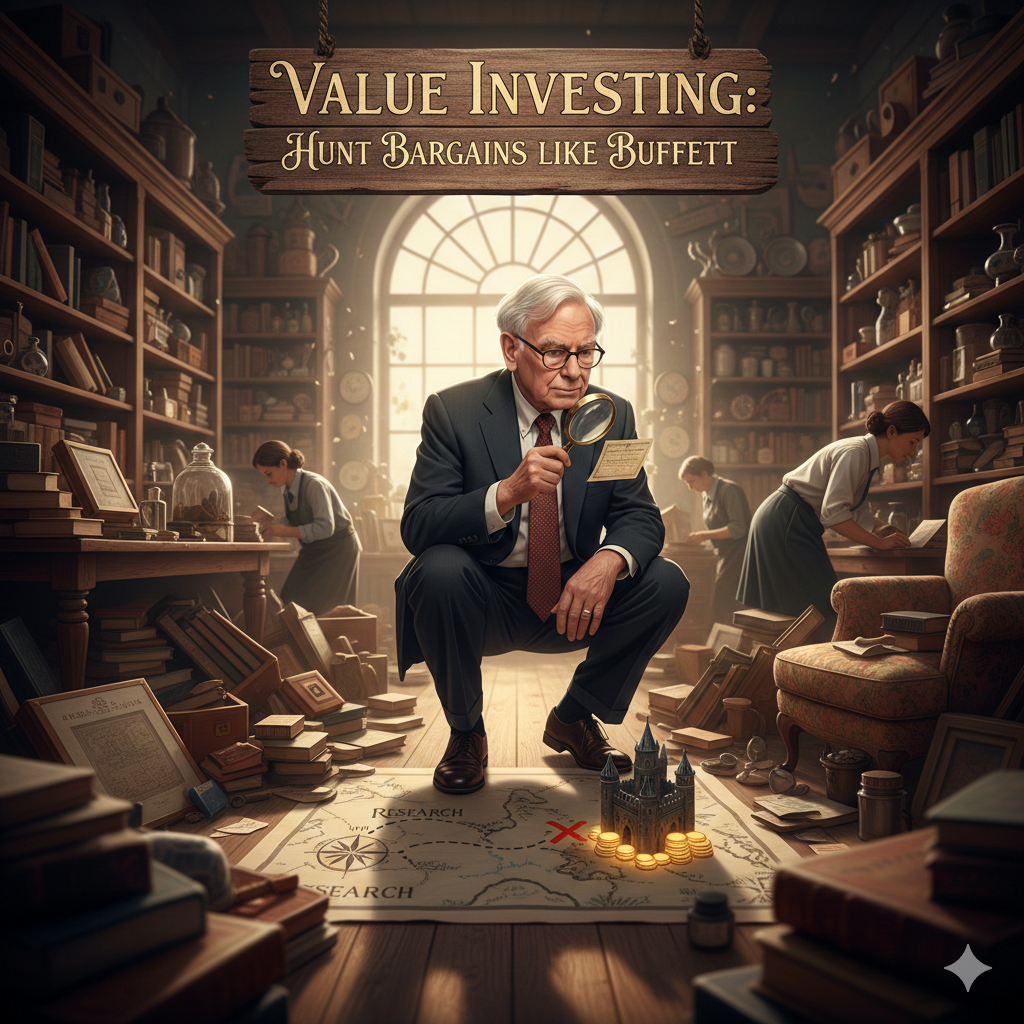
Warren Buffett’s career: Started young, built Berkshire Hathaway to $900B via value picks. Airlines seemed cheap post-9/11; he won big.
For beginners: Use ETFs like Vanguard Value (VTV). Studies show value beats growth long-term, though 2025 tech favors growth.
4. Growth Investing: Bet on Tomorrow’s Stars
Pick fast-growing firms—tech, biotech. High prices now, but earnings explode later.
Pros:
- Huge gains (Amazon up 100x in 20 years).
- Exciting for young investors.
Cons:
- Volatile—drops sharp.
- No dividends often.
2025 trend: AI and green tech. NerdWallet lists growth stocks as top for year. Start small with ARKK ETF.
5. Momentum Investing: Ride the Hot Wave
Buy rising stocks, sell falling ones. Use trends from news or charts.
Pros:
- Quick wins in bull markets.
- Data-backed short-term.
Cons:
- Crashes hard in turns.
- Needs watching—not for set-it-forget-it.
Beginners: Limit to 10% portfolio. TradingView’s charts help spot momentum—free tools for analysis. Link to Free TradingView giveaway for beginner charts2.
Stock Investment Strategies for Beginners: Safe Stock Plays
Stocks own company bits. Scary? Not if diversified.
Best stock investment strategies for beginners:
- Index funds: 80% of newbies’ picks per Reddit guides.
- Blue-chips: Stable giants like Coca-Cola.
2025: Small-caps poised for rebound post-rates. Bankrate says growth stocks lead.
Example: Invest $1,000 in SPY ETF. Historical 7-10% yearly growth.
Use fractional shares—buy $10 of Amazon via Robinhood.
Real Estate Investment Strategies for Beginners: Own Without Hassle
Real estate builds wealth slowly but surely. Beginners skip buying homes—too much cash.
Real estate investment strategies for beginner:
- REITs: Funds owning properties. Buy shares like stocks.
- Crowdfunding: Sites like Fundrise—$10 starts.
Pros: 4-6% dividends, inflation hedge.
2025: Rates down boosts values. Mintos notes blue-chips in REITs.
VNQ ETF: Easy entry, 3.5% yield.
Bitcoin Investment Strategies for Beginners and Crypto Investment Strategies for Beginners
Crypto’s wild—Bitcoin hit $100K in 2025 projections. High risk, high reward.
Bitcoin investment strategies for beginners:
- HODL: Buy and hold long-term.
- DCA: $20 weekly into BTC ETF.
Crypto investment strategies for beginners 2025: Stick to top coins—BTC, ETH. Use Coinbase for safety.
Pros: 100%+ yearly averages past decade.
Cons: 50% drops are common. Medium warns start small.
Tip: Limit to 5% portfolio. Regulated platforms only.
Best Gold Investment Strategies for Beginners: Safe Haven Shine
Gold hedges inflation. 2025 forecasts: $2,500/oz amid uncertainty.
Best gold investment strategies for beginners:
- ETFs: GLD tracks price, no storage.
- Coins: Physical for touchable feel.
Pros: Up 20% in volatile years.
Cons: No income, storage costs.
WallStreetZen ranks it top for beginners.
Investment Strategies for Beginners 2025: What’s Hot This Year
In investment strategies for beginners 2025, blend old with new. Best investment strategies for beginners 2025 lean ESG ETFs—sustainable picks up 15% yearly. Investment strategies for beginners 2025 include AI funds, per BlackRock.
Crypto investment strategies for beginners 2025: ETH upgrades boost staking yields to 5%.
Investment strategies for beginners in the United States: Roth IRAs for tax-free growth. USA focus: S&P heavy.
Startup Investment Strategies for Beginners: Dream Big Small
Angel investing? Crowdfund via StartEngine—$100 minimum.
Pros: 10x returns if hits.
Cons: 90% fail.
For newbies: Funds like AngelList.
Art Investment Strategies for Beginners: Creative Gains
Art appreciates 8-10% yearly. Platforms like Masterworks fractionalize—own Picasso shares.
Pros: Fun, diversifies.
Cons: Illiquid, expertise needed.
2025: Digital art NFTs rebound cautious.
Hedge Fund Investment Strategies for Beginners: Peek Behind Curtain
Hedge funds use tricks like shorts. Beginners: ETFs mimicking them, low entry.
Pros: Market-proof.
Cons: High fees (2/20 rule).
Stick to basics—avoid till experienced.
Popular Investment Strategies for Beginners USA: Homegrown Wins
Investment strategies for beginners usa: 401(k) matches—free money. Simple investment strategies for beginners: Robo-advisors.

Top investment strategies for beginners: Per Quora, compound interest rules.
Safe Starts: Robo-Advisors and Apps
Betterment or Wealthfront: Auto-diversify for pennies.
Acorns: Micro-invests change. Stash teaches stocks.
FinnyFlow says apps yield 4-5% safe.
Common Mistakes and How to Dodge Them
- Chasing hot tips: Stick to plans.
- No diversification: Mix assets.
- Panic sell: Hold through dips—markets up 90% long-term.
- Ignore fees: Pick low-cost.
Rule One Investing: Educate first.
Tools and Resources: Learn Without Overwhelm
- Books: “Intelligent Investor” by Graham.
- Simulators: Investopedia’s free tester.
- Communities: Reddit’s r/investingforbeginners.
For prop trading peek, SynBioFunds analytics—but verify for beginners3.
Build Your Portfolio: Action Plan
- Open account.
- Fund with $100.
- Pick 60% stocks, 40% bonds.
- Review yearly.
CapitalGeniusPro: DCA into ETFs.
FAQs: Investment Strategies for Beginners in 2025
What are the best investment strategies for beginners in 2025?
The best investment strategies for beginners 2025 are passive index investing and dollar-cost averaging (DCA). They are simple, low-cost, and work great even if you have little money or time.
How much money do I need to start investing as a beginner?
You can start with as little as $10–$50. Many apps let you buy fractional shares, so you don’t need thousands to begin simple investment strategies for beginners.
Are stock investment strategies for beginners safe?
Yes — when you use stock investment strategies for beginners like buying low-cost S&P 500 index funds. The market has ups and downs, but over 10+ years it has always gone up.
Should beginners try crypto investment strategies in 2025?
Only with money can you afford to lose. Crypto investment strategies for beginners 2025 should start small (1–5 % of your total savings) and use DCA into Bitcoin or Ethereum through trusted platforms.
What is the easiest investment strategy for beginners?
Dollar-cost averaging into a total stock market ETF (like VTI or VOO) is the easiest. You set up automatic monthly buys and forget about timing the market.
In Conclusion: Your Path to Wealth Awaits
Investment strategies for beginners open doors to freedom. From passive indexes to cautious crypto dips, start simple in 2025. Diversify, stay steady, learn as you go. Consistency trumps smarts—$100 monthly compounds huge. You’ve got this; markets reward patience.
What’s your first investing goal this year?
References
- Investopedia.com : Comprehensive strategies guide. Targets novices seeking structured education on passive and value investing. ↩︎
- FreeTradingView.com : Charting tools and community. Suits semi-active beginners learning analysis via free access and tutorials. ↩︎
- SynBioFunds.com : Analytics for advanced macro views. Appeals to aspiring traders exploring prop strategies, but beginners should pair with basics. ↩︎