

If you are just starting to grow your money, you will ask one big question: Should new people buy stocks first or a house first?
Both ways have made people super rich, but they are very different – especially when you don’t have a lot of money, time, or know-how.
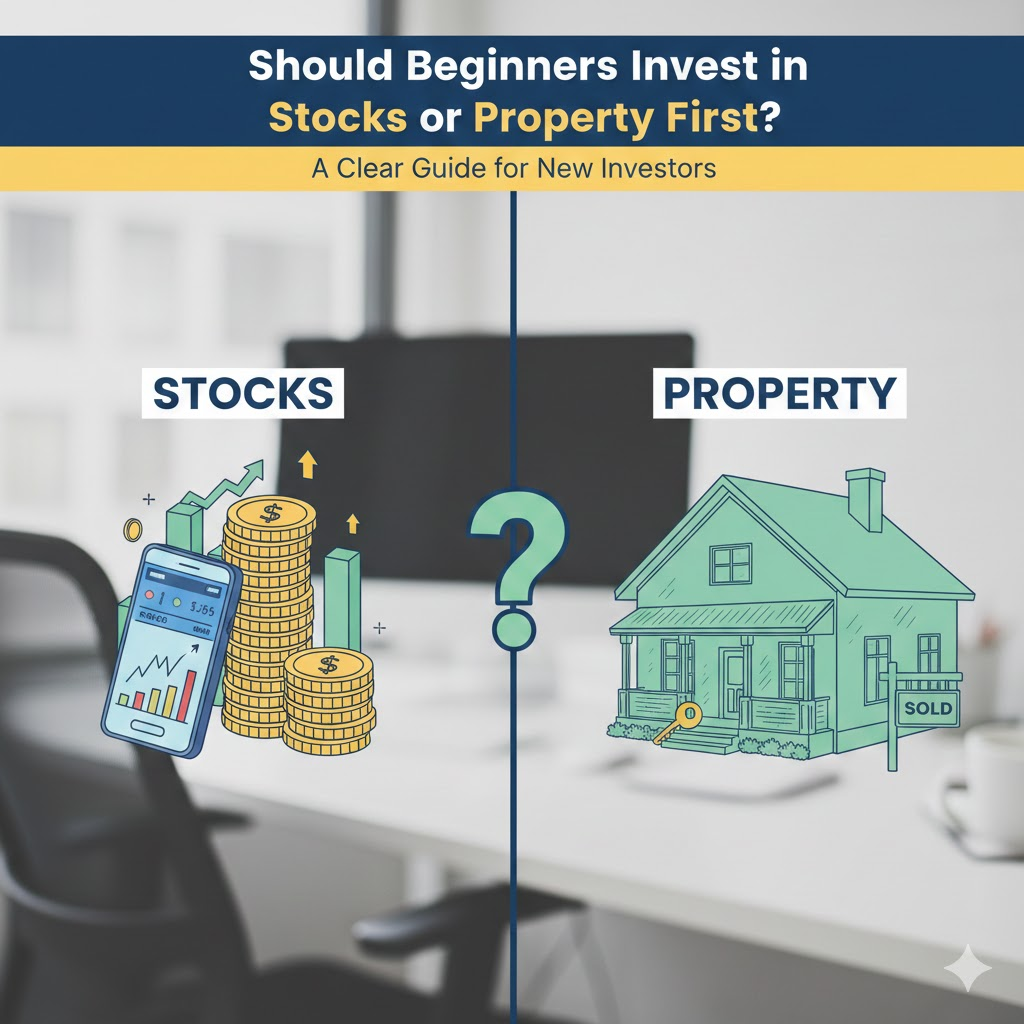
Why Stocks Win for 99% of Beginners
1. You Can Start with Almost No Money
- Open a brokerage account with $0–$100
- Buy fractional shares or low-cost ETFs (Vanguard, iShares, Schwab)
- Many platforms now offer zero commission trading Compare that to property: even a 5–10% down payment on a $400,000 home is $20,000–$40,000 before closing costs.
2. True Hands-Off Passive Investing Exists
With ETFs and index funds for beginners, you literally do nothing after the first click.
- Global stock markets have returned ~10% annualized over the last 100+ years (including dividends)
- A simple S&P 500 or MSCI World ETF gives you instant portfolio diversification tips across thousands of companies
3. Perfect Liquidity When Life Happens
Need money in 3 days? Sell your stocks — money hits your bank in 1–5 business days. Property? Good luck selling a house in under 3–6 months without losing thousands.
4. Compound Interest Through Stocks Works Like Magic
Start investing $500/month at age 25 in a global stock ETF at 9–10% average return: → By age 55 you could have over $1.2 million (historical data, not guaranteed)
The Real Truth About Real Estate for Beginners
Real estate is amazing, but rarely suitable for true beginners with small capital.

Common Myths vs Reality
| Myth | Reality in 2025 |
| “Property always goes up.” | Prices crashed 30–50% in 2008–2009. Many cities still haven’t recovered fully. |
| “I’ll get rich with rental income.” | After mortgage, taxes, insurance, maintenance, vacancies — rental income potential is often 1–4% net. |
| “Leverage makes me money faster.” | Yes, real estate leverage benefits are real — but so is the risk of negative equity and foreclosure. |
Hidden Costs That Shock New Landlords
- Property maintenance costs: 1–2% of home value per year
- Unexpected repairs (new roof, HVAC) can wipe out years of rent
- Tenant damage, eviction costs, months of vacancy
- Time and stress — this is NOT passive income through property for most
When Property Actually Makes Sense First (Rare Cases)
- You already have $50,000–$100,000+ saved for a solid down payment
- You plan to live in the property (house-hacking with 5% down, FHA or similar)
- You have a stable income and a high risk tolerance
- You want inflation hedge investment choices and don’t mind illiquidity
Even then, most experts suggest building a stock portfolio first, then transitioning into property once you have 6–12 months of expenses saved and experience. Ares Wealth Management Solutions – Building Wealth with Private Markets in 5 Key Charts1
Should Beginners Invest in Stocks or Property First? The Data Says Stocks
Historical returns (1870s–2024, data from NYU Stern, Credit Suisse Yearbook):
- Global stocks: ~9–11% annualized
- U.S. residential real estate: ~6–7% (including rent, before costs)
- After inflation, leverage, and expenses, direct property often barely beats bonds
Real estate vs equities return over long periods clearly favors stocks when you have under ~$100,000 to invest.
Smart Hybrid Path Most Wealthy People Actually Follow
Here’s what self-made millionaires often do:
- Years 1–5: Max out low-cost global stock index funds
- Years 5–10: Keep adding to stocks + save aggressively
- Year 10+: Use stock gains + higher income for first property down payment
This gives you capital growth investments early + real estate cash flow vs stocks appreciation later.
Best Beginner-Friendly Options in 2025
For Stocks (Start Here)
- Vanguard Total World Stock ETF (VT)
- Schwab U.S. Broad Market ETF (SCHB)
- iShares Core MSCI World UCITS ETF (for Europe/Australia)
For Real Estate (Without Buying a House)
- REITs for new investors — publicly traded real estate you can buy like stocks
- Liquid, diversified, often pays 3–6% dividends
- Start with $100
Risk Tolerance for First-Time Investors: Be Honest
Ask yourself:
- Can I watch my money drop 50% and not sell? → Stocks OK
- Can I handle $15,000 emergency roof repair? → Maybe wait on the property
- Do I want to spend weekends fixing toilets? → Stick to stocks/REITs
FAQs
Should beginners buy stocks or a house first?
Almost always buy stocks first! Stocks are easy and cheap to start. Houses need lots of money and work.
How much money do I need to start with stocks?
You can start with just $50 or $100! Many apps let you buy tiny pieces of big funds for free.
Can I start investing if I only have a little money?
Yes! Stocks and stock funds are perfect for small amounts. A house needs $20,000–$50,000 or more to begin.
Is it true that houses always go up in price?
No! Houses went down a lot in 2008 and stayed low in some places. Stocks go up and down too, but they grow more over many years.
Do rental houses really make easy money?
Not easy! After paying for fixes, empty months, and taxes, you might only keep 1–4% extra money. It takes a lot of work and worry.
Conclusion
For 2025 and beyond, start with stocks (or stock ETFs). They give you:
- Lower entry barrier
- True passive investing
- Proven long-term vs short-term investing track record
- Flexibility and peace of mind
Once you’ve built a $50,000–$100,000+ portfolio and emergency fund, then consider adding property for diversification and inflation protection.
Should beginners invest in stocks or property first? Stocks win, by a mile, for almost everyone starting out.
What’s your situation, how much can you invest today, and how much time do you have? Drop a comment below, and I’ll give you a personalized starting plan!