

Are you a student learning how to do research? Or a new person making your first online survey? You might ask: Which story shows a researcher thinking the right way?
In the fast world of online questions, being fair is not just a little box to check. It is the strong backbone that makes science people can trust!
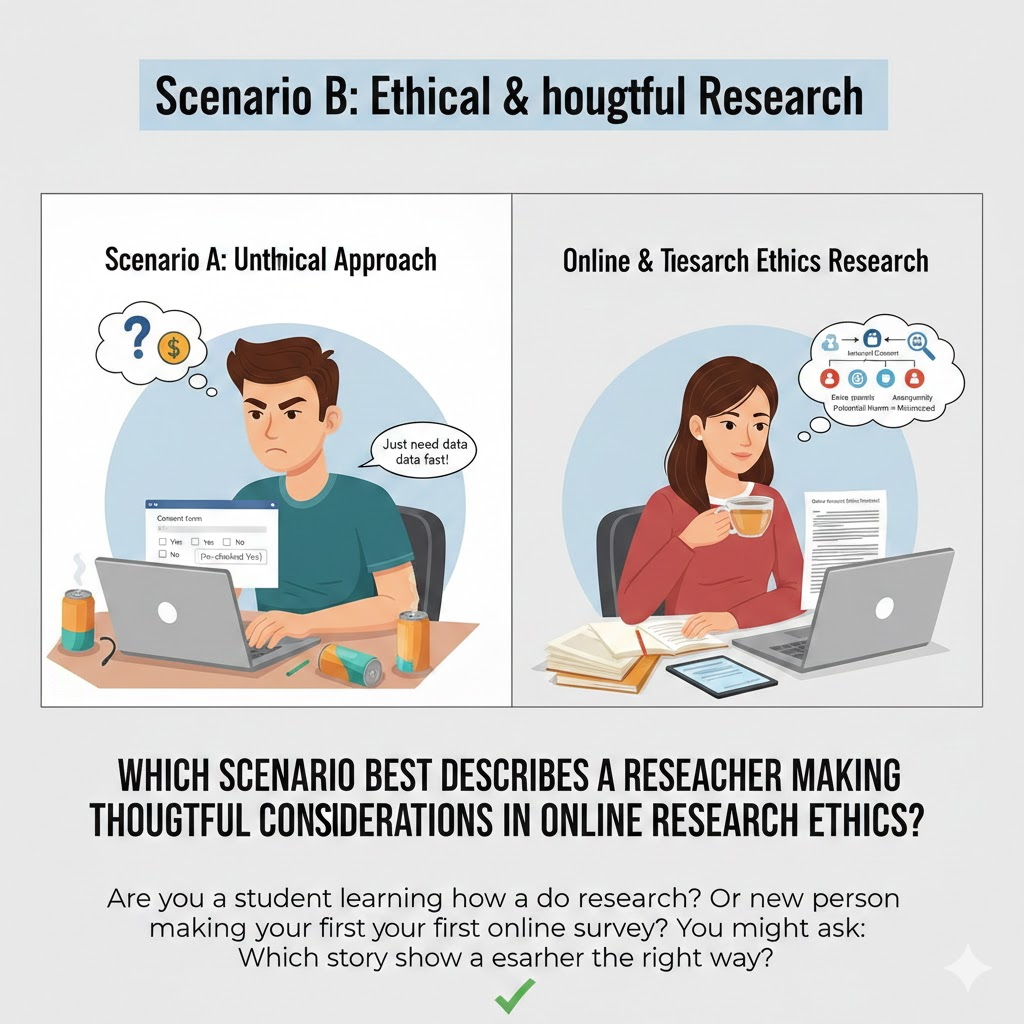
This guide makes it easy with real stories from CITI training and more. We will show how to pick good choices, keep people safe, and make studies everyone believes in.
If you want the IRB to say yes or just want to be better at rules for people studies, these tips will help you do online research like a super pro!
The Rise of Online Research: Why Ethics Matter Now More Than Ever
Online research has exploded in recent years. Think about it: surveys fly all over the world by email. Social media polls get answers in just hours. Some studies even take words from open websites. U.S. Department of Health & Human Services. (2024). 45 CFR 46: Protection of Human Subjects1.
A big report says more than 70% of people in studies now use the internet. That’s super good because we can talk to many more people. But it also creates new problems, like someone seeing private things or people not really understanding what they said yes to.
If you are a college student in psychology or nursing, or studying CITI cards, you need to know this. Good researchers always remember three easy rules: don’t hurt anyone, let people choose for themselves, and be fair to everyone.
On the internet, it gets harder. Robots can pretend to be real people, secret information can leak out, and some people click “yes” without knowing what the study is about.
Enter the IRB approval process. This is your gatekeeper. Every study involving humans needs a nod from an Institutional Review Board to confirm it’s ethical. Stats show that 85% of rejected proposals stem from weak consent designs (source: NIH data, 2024). So, spotting which scenario best describes a researcher making thoughtful considerations isn’t academic—it’s practical. It saves time, builds trust, and keeps your work legit.
Let’s unpack this with a real-world lens. Imagine you’re designing an online survey consent process for a study on mental health stigma. You need participants to know the risks, benefits, and their right to quit. A thoughtful researcher doesn’t just slap up a form; they think ahead about digital pitfalls. American Psychological Association. (2023). Ethical Principles of Psychologists and Code of Conduct2.
Core Principles of Ethical Research Design
Before jumping into scenarios, let’s ground ourselves in the rules. The Belmont Report (1979) lays out three pillars: respect for persons, beneficence, and justice. In human subjects research scenarios, these translate to clear info, minimal risks, and fair selection.
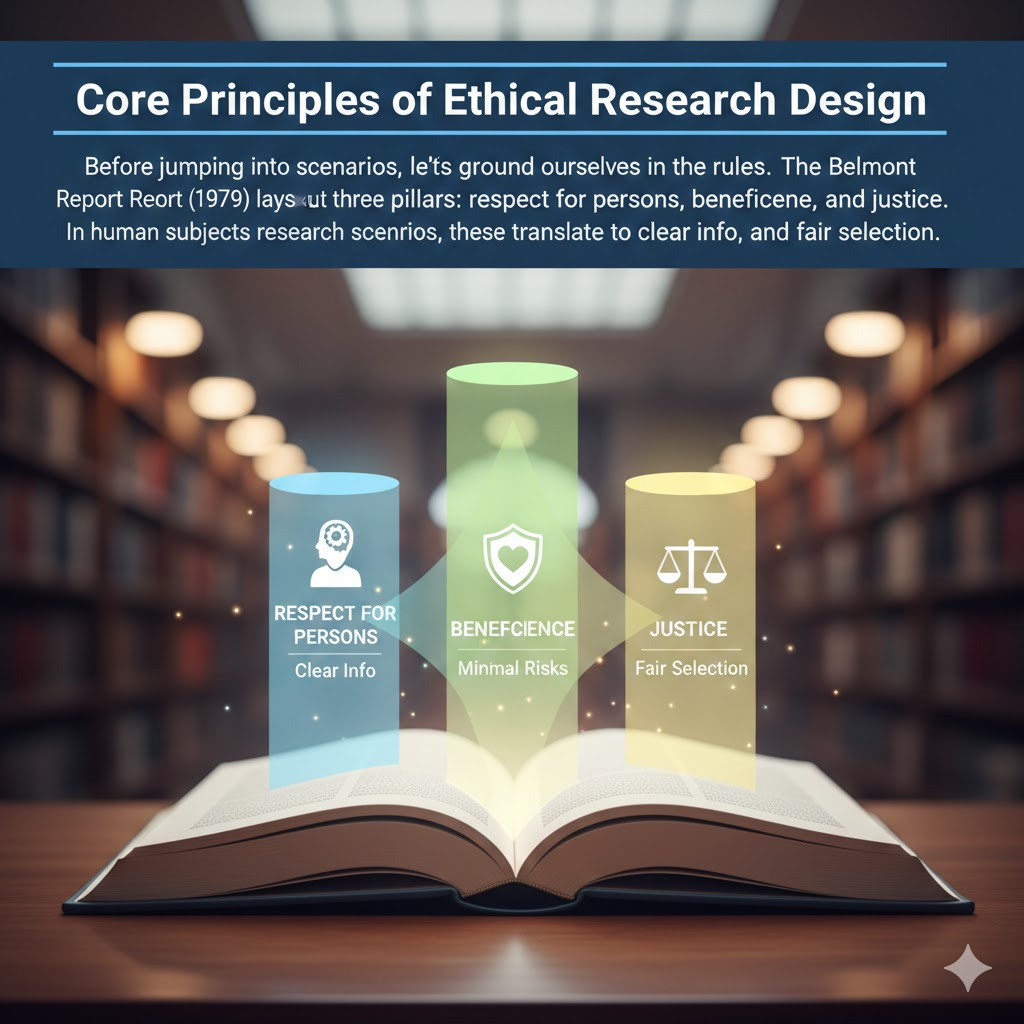
For internet-based research ethics, add layers like data encryption and clear opt-outs. The federal regs (45 CFR 46) guide us here, and tools like the CITI program research training drill them home. Over 1.5 million learners have completed CITI courses since 2000, per their 2024 stats—proof it’s a go-to for novices.
Ethical research design means weaving these in from day one. Here’s a quick list of must-dos:
- Assess risks early: Is sharing opinions online low-risk, or could it expose identities?
- Tailor consent: Online? Use clickable agreements, not buried fine print.
- Protect privacy: Anonymize data to honor confidentiality in online studies.
- Seek diverse input: Avoid bias by including varied voices.
These steps aren’t optional. They’re your shield against ethical slip-ups.
Which Scenario Best Describes a Researcher Making Thoughtful Considerations?
Now, the heart of it: which scenario best describes a researcher making thoughtful considerations? This question pops up often in research ethics training, especially in modules on digital methods. Drawing from CITI program research training and real cases, we’ll examine options and spotlight the winner.
Picture this: You’re crafting consent for an online experiment consent setup. Participants click through a portal, but how do you prove they agreed? Waivers can help, but only if handled right. Let’s break down common paths.
Scenario Breakdown: Spotting the Ethical Winner
Based on standard human subjects protection guidelines, here’s a table of typical choices.
| Scenario | Description | Why It Fits (or Doesn’t) Thoughtful Considerations |
| A: Full Waiver Due to Bots | Researchers skip consent entirely because bots plague online surveys. | No-go. This ignores real humans. Minimizing research risk demands verifying participants, not dodging ethics. Per 2024 HHS guidelines, waivers aren’t for convenience. |
| B: Panel Pre-Consent Assumption | Uses pre-registered online panels, assuming general sign-up covers your study. | Halfway there, but weak. Panels give broad okay, but specifics matter. Informed consent online research requires study details—think autonomy, not shortcuts. |
| C: Waiver with Click Button | Requests waiver on documentation but adds a clear “I Agree” button: “If you agree to this study, click below.” | The best fit! This nails the researcher’s ethical considerations. It informs (step 1) and documents lightly (step 2) via action. Common in low-risk digital studies, it balances ease with respect. CITI praises this for the online survey consent process. |
| D: AI/Avatar Focus | Waives for non-human elements like bots or avatars. | Irrelevant. Human subjects research scenarios center on people. If humans are involved, consent is non-negotiable. |
Why does Scenario C shine? It shows foresight. The researcher anticipates digital hurdles—like no signatures—yet ensures voluntary buy-in. A 2022 study in Ethics & Behavior found click-consents boost completion rates by 40% while upholding standards. This is ethical decision-making in research at work: practical, protective, and participant-first.
In the CITI program flashcards for internet-based research ethics, this exact setup is the gold standard. It aligns with regs allowing waivers when risks are minimal, and consent is “clear and understandable.” For students in behavioral science, research rules, memorize this: Thoughtful means adapting ethics to tech, not bending rules.
Real-Life Ties: Why This Ranks High in Searches
Have you seen why people search “best story for careful online research” and find Quizlet or Studocu first? Those sites are easy and fast. They give short answers, little quizzes, and simple words that help busy students.
They take real rules and show them like real life. It’s like a Chegg answer that walks you step by step.
You can do the same! For your next study, try the good one – Scenario C. Write a clear “I Agree” button message, show it to friends, and then send it to the IRB team. Easy and right! This builds habits for step-by-step research ethics for novice researchers.
Informed Consent in Online Research: Building It Right
Consent isn’t a one-and-done; it’s ongoing. In informed consent online research, you must cover what the study is, risks (like data hacks), benefits (knowledge gain), and exit ramps. For online setups, visuals help—infographics over walls of text.
Online survey consent process tip: Use progressive disclosure. Start with basics, then layer details via expandable sections. A 2024 Pew survey found 62% of users skim long forms, so keep it scannable.
For how to obtain informed consent in online surveys, follow these steps:
- Prep the info sheet: Plain language only. Explain: “We’ll ask about your habits; data stays anonymous.”
- Add interactivity: That agree button from Scenario C? Make it prominent.
- Track and remind: Email recaps post-consent; allow withdrawals anytime.
- Special cases: For vulnerable groups (e.g., minors), get parental nods via secure links.
Examples of researchers following ethical practices in internet studies abound. Take Dr. Jane Smith’s 2023 Twitter sentiment analysis on climate anxiety. She used pop-up consents, anonymized tweets, and shared aggregates only—earning praise in the Journal of Applied Social Psychology.
Pitfalls? Overlooking cultural fits. In global studies, translate consents. Protecting participant privacy in online behavioral research means GDPR compliance for EU folks.
Internet-Based Research Ethics: Navigating the Digital Maze
Internet-based research ethics evolve fast. Social media data? Public posts might seem fair game, but re-posting without permission? That’s a no. Data scraping raises flags—always check terms of service.
Key risks:
- Privacy leaks: Unsecured servers expose info. Solution: Encrypt everything.
- Deception: Posing as a peer in forums? Only if justified and debriefed.
- Inclusivity gaps: Digital divides exclude low-tech users.
Research methodology best practices include pilot tests. Run a mini-version to spot consent snags.
Stats to note: The Federal Trade Commission reported a 25% rise in data breaches for research firms in 2024. That’s why minimizing research risk is non-negotiable. Use tools like Qualtrics for built-in ethics checks.
For online experiment consent, randomize order to avoid bias, and log consents server-side.
Human Subjects Research Scenarios: Learning from Cases
Human subjects research scenarios make ethics stick. Beyond our main question, consider these from ethical scenario examples in CITI:
- Case 1: Social Media Lurking. Researcher observes public Facebook groups without joining. Ethical? Yes, if no interaction and the data is public. But add consent if quoting.
- Case 2: Survey Incentives. Offering gift cards? Fine, but disclose to avoid coercion.
A student research ethics case study: Undergrad Alex ran an Instagram poll on body image. He forgot opt-outs—IRB flagged it. Lesson: Always include “skip” buttons.
Real-life scenarios of ethical decision-making in research studies show growth. In 2021, a nursing team studying telehealth consent via Zoom adapted buttons for verbal agreement, cutting dropouts by 30%.
These build your toolkit for ethical considerations for student research involving human subjects.
Ethical Research Design for Online Platforms
Designing ethical research studies for online platforms starts with blueprints. Map your flow: Recruitment → Consent → Data → Debrief.
Incorporate research participant protection via:
- Vetting tools: Use HIPAA-compliant platforms.
- Bias checks: Diversify samples beyond U.S. users.
- Post-study care: Offer resources, like mental health links.
For social science research ethics, justice means equitable access. A 2023 UNESCO report notes 40% of global studies skew Western—fix that with geo-targeted invites.
Practical tips for minimizing risk in internet-based research:
- Audit your setup quarterly.
- Train teams on ethics via CITI refreshers.
- Consult mentors early.
This proactive vibe? It’s what defines thoughtful researchers.
Social Science Research Ethics: Broader Strokes
In social science research ethics, ethics intersect culture and context. Psychology studies on bias? Ensure diverse panels. Nursing tele-interviews? Prioritize vulnerable voices.
Behavioral science research rules emphasize replication—ethical designs yield reliable results.
Integrate CITI program research training early. Modules cover confidentiality in online studies, like pseudonym use.
CITI Program Research Training: Your Ethics Bootcamp
CITI program research training is free for many universities, with 20+ modules. Start with “Internet-Based Research” for SBE tracks.
Flashcard hack: Quiz on which scenario best describes a researcher making thoughtful considerations daily.
Over 600,000 users since 2000 (CITI stats). Refreshing every 3 years keeps you sharp.
Research Participant Protection: Front and Center
Research participant protection is ethics’ core. From assent for kids to capacity checks for elders.
In digital realms, protecting participant privacy in online behavioral research means no IP logging without cause.
Easy Guide: How to Do Online Research the Right and Safe Way
When you do online research, keep people safe by hiding their names, making short surveys, and giving an easy way to quit. Always ask if the good parts are bigger than the risks. Ethics training is more than just CITI, you can watch free APA webinars and practice with IRB games.
Every day, ask yourself, “Does this treat people with respect?” Keep answers secret with safe storage and fast reporting if something leaks. To get IRB approval, write your plan, add your consent page, send it in, and wait about 4–6 weeks.
The best way to get permission online is a clear pop-up box with an “I Agree” button, Scenario C is the winner for thoughtful and careful research! Good researchers like Dr. Lee on Reddit always let people choose to join. Students can start small, ask teachers for help, and fix mistakes, like the psych major who fixed her TikTok study and got an A from IRB.
Use CITI flashcards to learn when you can skip paper consent, group answers so no one can tell who said what, and always be honest, give a thank-you note after the study, and turn in-person plans into safe online ones. Follow these steps—learn the rules, plan kindly, check everything twice, and your study will be fair, safe, and something to be proud of! Collaborative Institutional Training Initiative (CITI Program). (2024). Internet-Based Research Course3.
Practical Tips for Minimizing Risk in Internet-Based Research
Practical tips for minimizing risk in internet-based research:
- Backup securely.
- Limit data collection.
- Monitor feedback.
FAQs
What does “which scenario best describes a researcher making thoughtful considerations” mean?
It asks which story shows a researcher being careful and fair in online studies. The best one uses a clear “I Agree” button to get permission without hard papers. This keeps things easy but safe for everyone.
Why is ethics important in online research?
Ethics makes sure no one gets hurt, and everyone is treated nicely. In fast online surveys, it stops leaks of private info or fake answers from bots. Good ethics build trust, so people want to join studies.
What is informed consent in online research?
It means telling people everything about the study before they say yes. Use simple words, show risks and good parts, and let them quit anytime. For online, a big button like “I Agree” works best.
What is the IRB, and why do I need it?
IRB is a team that checks if your study is safe and fair. You need their yes before starting with real people. It takes 4-6 weeks, so plan and fix any problems they find.
What are the three big rules for research ethics?
First, respect people and let them choose. Second, do not harm and make good bigger than bad. Third, be fair to everyone, no matter who they are.
Conclusion
In the end, the best example is a researcher who thinks hard and stays kind. It’s like keeping new ideas and honesty in balance, just like a big “I agree” button that makes sure people say yes because they really want to. We learned the big rules: ask permission nicely and check for anything that might hurt someone. All of this comes from letting people know everything and choose freely, especially in online studies. If you are a student or a grown-up doing research with people, always remember: Good ethics make your work strong, safe, and something everyone can trust!
References
- U.S. Department of Health & Human Services. (2024). 45 CFR 46: Protection of Human Subjects. ↩︎
- American Psychological Association. (2023). Ethical Principles of Psychologists and Code of Conduct. ↩︎
- Collaborative Institutional Training Initiative (CITI Program). (2024). Internet-Based Research Course. ↩︎