
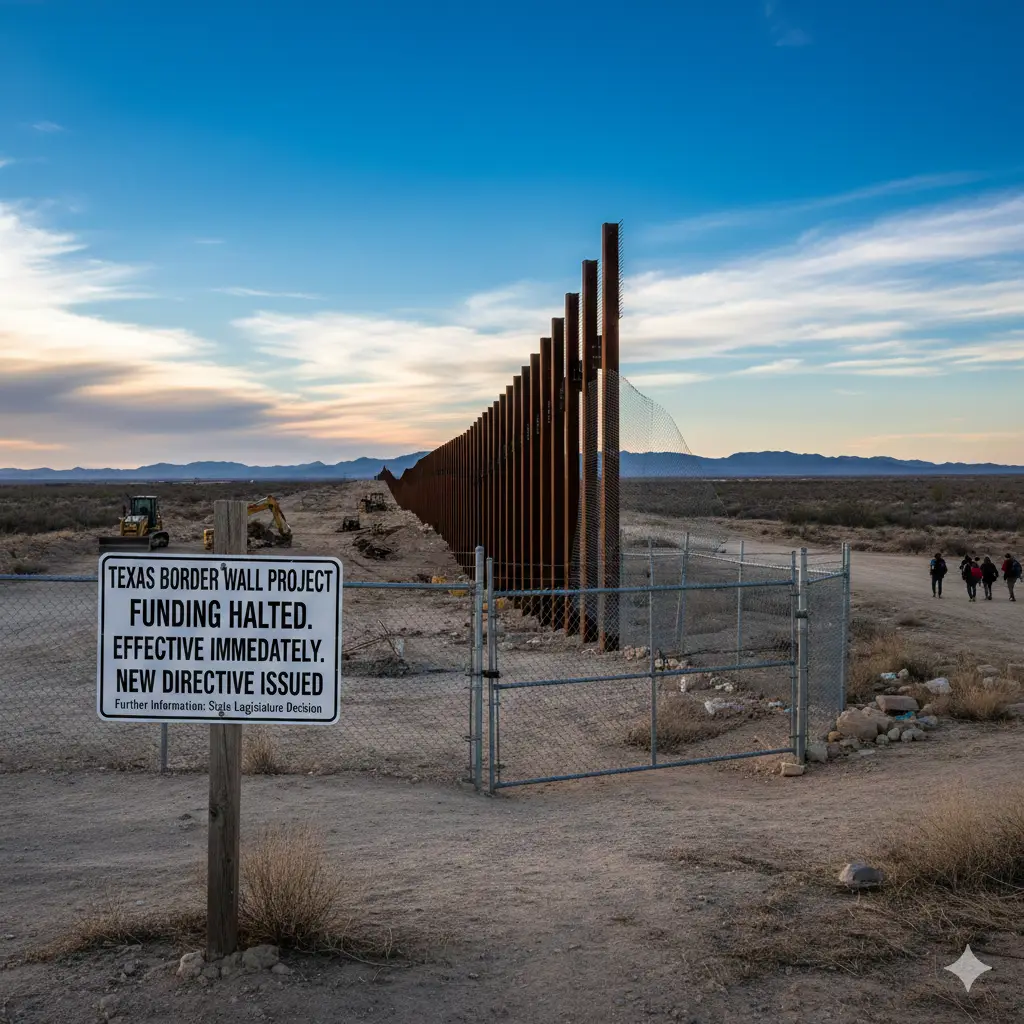
Texas halts new funding for US-Mexico border wall construction. This shift happened in June 2025 when lawmakers passed the new state budget. No fresh money goes to building more wall sections. Instead, funds support other border work. Policy watchers, Texas locals, and national immigration followers track this closely. It shows how state plans change with federal actions.
The project started in 2021 under Gov. Greg Abbott. Texas built its own wall to boost security. Now, with strong federal steps under President Trump, the state adjusts. Migrant crossings dropped sharply. This lets Texas save on walls and focus elsewhere. Read on for facts, reasons, and what it means.
Texas shares 1,254 miles of border with Mexico. Crossings peaked in 2023 but fell by over 90% by mid-2025. Federal contracts added hundreds of miles of “Smart Wall” with tech and barriers. Texas built about 65 miles of state wall, costing over $3 billion. Remaining old funds may add up to 85 more miles by 2026, but no new starts.
Texas border wall funding stopped for fresh projects. Lawmakers gave $3.4 billion for border security over two years. This goes to the police and guards, not the concrete. Texas stops providing new funding for border wall construction1
Background on the Texas Border Wall Initiative
Gov. Abbott launched the state wall in 2021 as part of Operation Lone Star funding. He blamed federal gaps for high crossings. Texas became the first state to build its own barrier. Plans called for up to 805 miles, 30 feet high, at $28 million per mile.
The state raised private donations, too, over $55 million at one point. Construction used state land or agreed private spots. By June 2025, only 65-66 miles stood, in fragments across six counties like Cameron and Val Verde.
Challenges slowed work:
- Land owners refused access, about 24-33% said no.
- Costs rose high.
- Environmental groups fought it, saying it harms wildlife and rivers.
The wall sits in rural areas. Gaps let people bypass. Experts say it covers low-crossing spots, not high ones in cities.
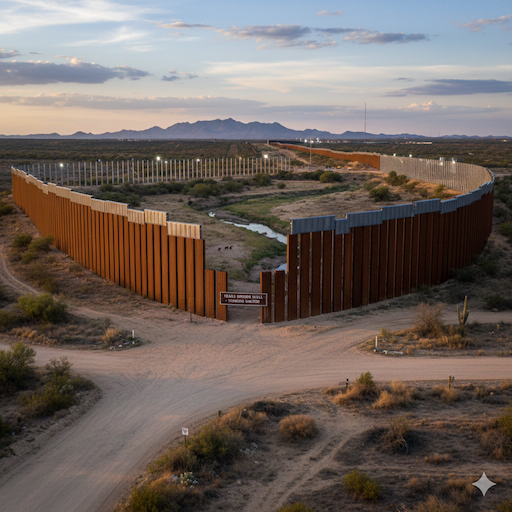
Federal wall history adds context. Past presidents built sections. Trump’s first term added some in Texas. His second term focuses on “Smart Wall”, barriers plus cameras, sensors, and lights. In 2025, big contracts were awarded billions for new miles in Texas sectors.
This federal push helps explain why Texas border wall construction has been halted for new state funds.
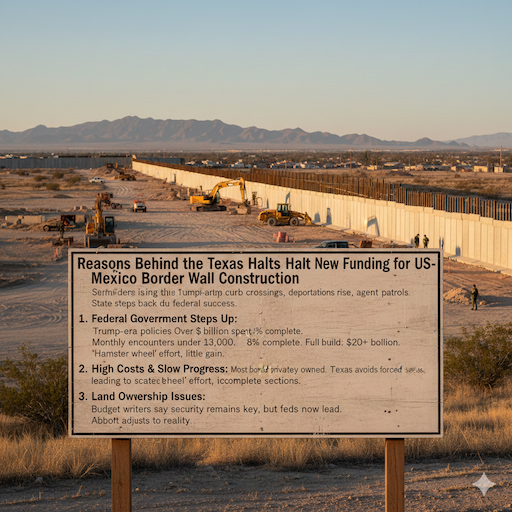
Reasons Behind the Texas Halts New Funding for us-mexico border Wall Construction
Texas halts new funding for US-Mexico border wall construction for clear reasons.
First, the federal government steps up. Trump’s team curbs crossings fast. Deportations rise. Agents patrol more. Monthly encounters drop to under 13,000. Abbott’s office says this success lets the state change plans.
Second, high costs and slow progress. Over $3 billion spent for 8% done. A full build could take 30 years and $20+ billion. Some Republicans question the value. One called it a “hamster wheel”: lots of effort, little gain.
Third, land issues block paths. Private owners hold most border land. Texas avoids forcing sales much. This leaves scattered sections.
Budget writers like Sen. Joan Huffman say border security stays key, but feds lead now. Abbott border wall decision adjusts to reality.
Critics note the wall was ineffective alone. Groups call it wasteful or harmful. Supporters say it helped early on.
This fits the Texas state budget 2025 priorities, balancing spending on schools, roads, and security.
Shift to Operation Lone Star and Other Strategies
Money redirects to Operation Lone Star. Launched in 2021, it deploys troops and police. They patrol, arrest, and stop drugs.
The program gets most of the $3.4 billion. Guards use boats, drones, and ground teams. Arrests top hundreds of thousands. It fills gaps with people, not just walls.
Texas immigration enforcement funding boosts this. Alternatives include:
- Tech like cameras and sensors.
- Roads for fast patrols.
- Water barriers in rivers.
Federal “Smart Wall” adds these too. Texas offers state wall sections to feds.
Texas shifts border security spending to flexible tools. Walls are good in spots, but troops catch more. Texas Stops Providing New Funding for Border Wall Construction2
Impacts on Communities and Security
Border towns feel changes. No new builds mean less disruption to farms and wildlife. Some jobs from construction end, but patrols keep others.
Safety views mix. Low crossings reassure many. Texans near the border want strong enforcement. Texas border security spending stays high.
National side: U.S.–Mexico border security improves with federal-state team. Advocates debate—some want more barriers, others aid or tech.
Data shows drops in drugs and entries at open areas. Ports catch most issues.
Impact of Texas border wall funding halt—saves state money, relies on feds.
Current Status and Future Outlook
As of late 2025, the state wall at about 66 miles. Old funds finish by 2026—maybe 150 total. No new state projects.
Federal builds hundreds more. Texas seeks reimbursement for past costs, up to $11 billion.
Texas border wall project update, winding down state role.
Future? If crossings rise, plans adjust. Now, focus on patrols and tech.
Texas border wall plans tied to federal success.
What happens to Texas border wall project now? Completes ongoing, pauses new.
Political and Policy Context
This reflects Texas Republican immigration stance, tough but practical. Abbott praises federal work.
Debates continue on immigration policy debate Texas. Walls are symbolic for some, costly for others.
Political reasons Texas ended border wall funding, federal help, and budget sense.
Federal vs state border enforcement, state steps back as feds step up. With only 8% built, Texas quietly defunds state border wall program3
Key Facts and Statistics
Here are the main points:
- Built: ~65-66 miles
- Planned: Up to 805 miles
- Cost so far: Over $3 billion
- New budget border funds: $3.4 billion (no wall)
- Crossings drop: 90%+
- Federal 2025 contracts: Billions for hundreds of miles
How much money Texas spent on the border wall, billions for limited miles.
Texas stops border wall funding, yes, for new.
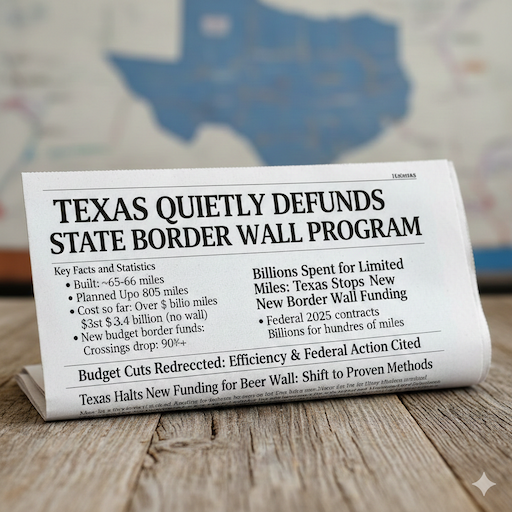
Texas border wall budget cuts, redirected.
This covers why did Texas stop funding the border wall, efficiency, and federal action.
Texas halts new funding for border wall explained, budget shift to proven methods.
Broader Border Security Alternatives
Texas explores border security alternatives:
- Advanced detection tech
- More agents
- River buoys and barriers
- Community programs
Border barrier construction is now a federal lead.
Texas border infrastructure includes ports and roads.
State spending priorities balance needs.
Border wall political controversy fades as results show.
Conclusion
Texas halting new funding for US-Mexico border wall construction marks a practical turn. After billions spent on limited miles, the state pivots to patrols, tech, and federal partnership. Low crossings and strong enforcement work better together. This saves taxpayer money while keeping security high.
In summary, the wall started, but now finishes with old funds. Focus shifts to flexible tools under Operation Lone Star.
How do you see state and federal roles in border security evolving? What priorities matter most to you?