
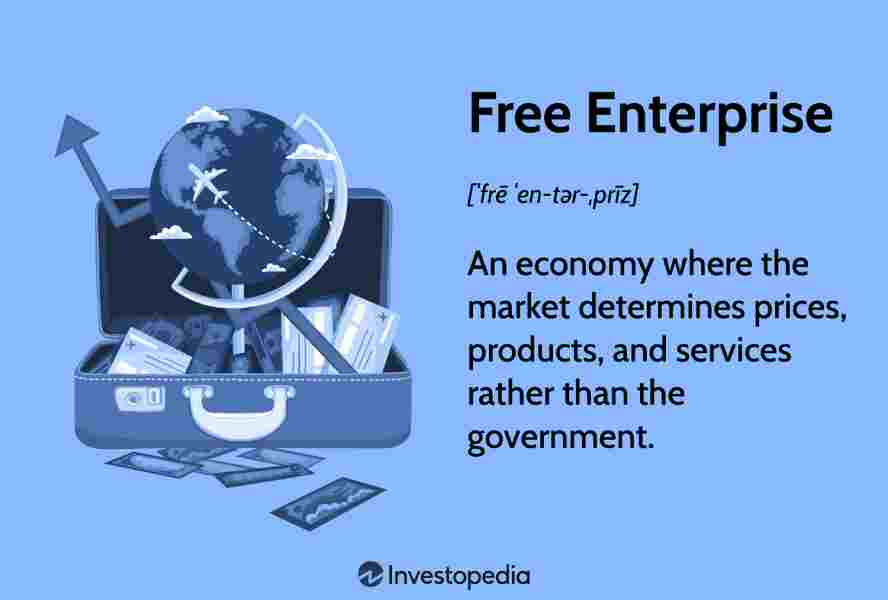
How Has The Free Enterprise System Contributed To Technological Innovation is a key question for students learning about economics. The free enterprise system, also called a free market or capitalism, lets people and businesses make their own choices with little government control. This setup pushes companies to create new tech to earn profits and beat rivals. In this system, private owners run businesses, and competition helps make better products. Profits motivate people to take risks on new ideas. Over time, this has led to big advances like the internet, smartphones, and electric cars. The U.S. uses this system a lot, and it has helped create many world-changing inventions. Competition makes firms improve fast, while the chance to make money draws investors to new tech. This cycle keeps innovation going strong.
What Is the Free Enterprise System
The free enterprise system is an economic setup where people can start and run businesses freely. Private individuals own companies, not the government. Key parts include private property, freedom to choose, competition, and the profit motive and technology. In this system, prices come from what buyers want and what sellers offer. Businesses compete to sell more, which pushes them to make better things. Unlike systems where the government plans everything, free enterprise lets ideas flow fast. This freedom helps entrepreneurial innovation grow. People can try new products without asking permission much. Profits go back into the business for more growth. This has built strong economies in places like the U.S. Over history, it turned simple ideas into big tech changes.
The Role of Competition in Driving Innovation
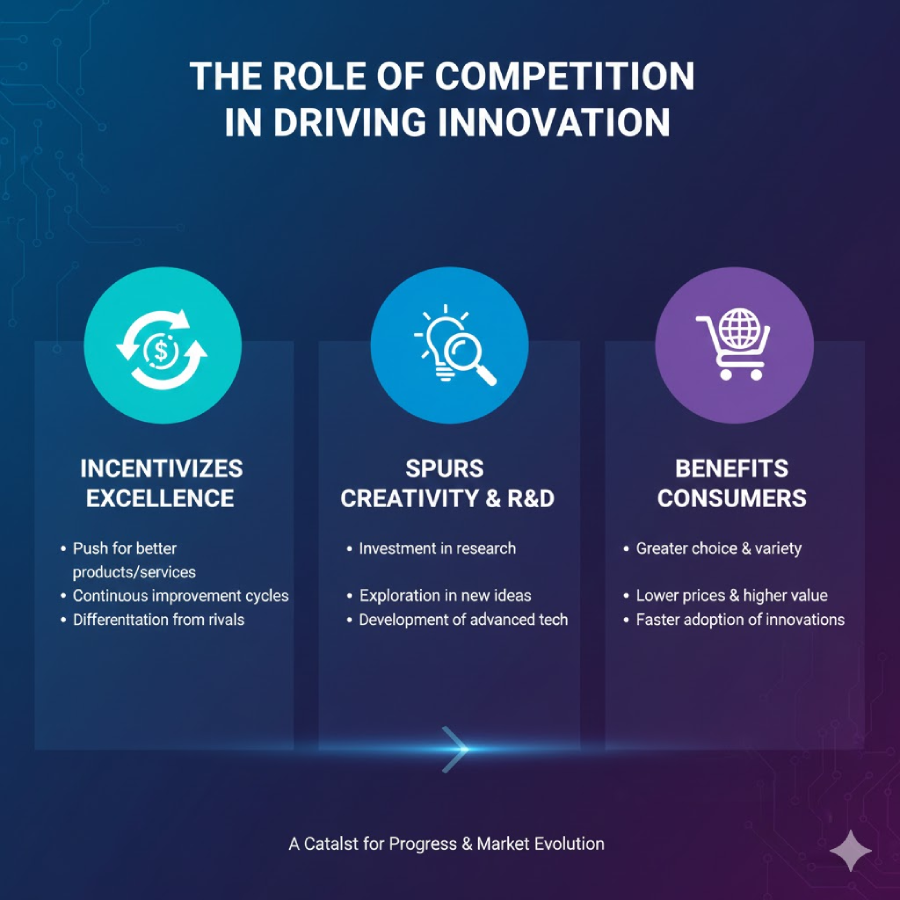
Market competition and technology go hand in hand in free enterprise. When many companies sell similar things, they must stand out. This means making products better, faster, or cheaper. Competition pushes firms to invent new ways. For example, phone companies add new features each year to win customers. This leads to the role of competition in innovation. Firms spend on research to get ahead. Without rivals, there is less push to change. But in free markets, losing customers hurts sales, so innovation happens. Studies show countries with strong competition have more new patents. This setup rewards winners with profits, drawing more people to create. Overall, competition acts like a force that keeps tech moving forward.
How the Profit Motive Fuels Technological Advancement
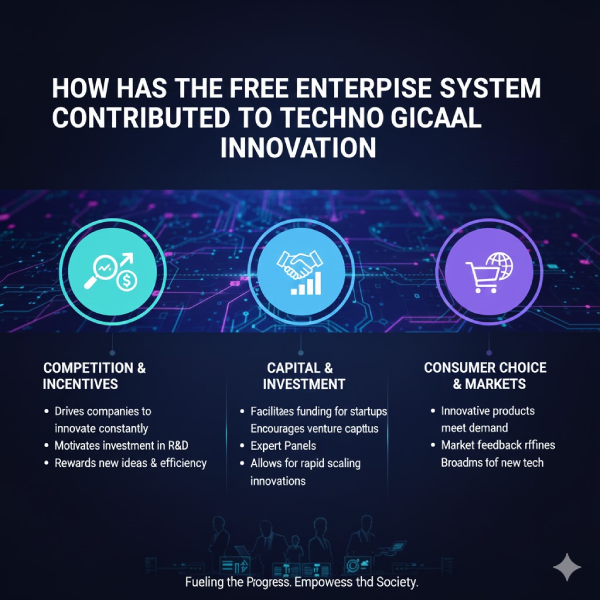
The profit motive and technology link is strong. People invent new things hoping to make money. If a new idea sells well, the inventor earns profits. This money can fund more ideas. In free enterprise, profits are the reward for good work. This motivates risk-taking on big projects. For instance, companies invest billions in research for higher sales later. Profits also attract investors who fund startups. Without this motive, fewer people would try hard inventions. History shows profit-driven firms create most everyday tech. This cycle of earning and reinvesting keeps incentives for innovation in free markets alive. It turns personal gain into benefits for all.
Historical Examples of Free Enterprise and Innovation
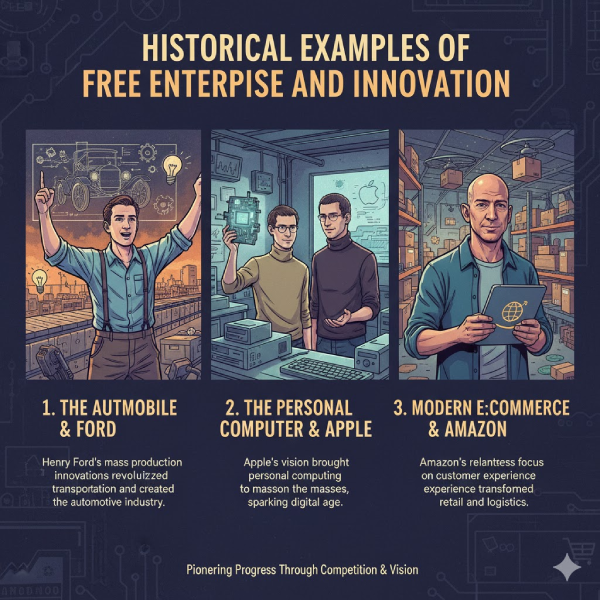
Long ago, the free enterprise system sparked big changes. In the late 1800s, low rules let inventors like Thomas Edison create the light bulb and phonograph. Companies grew fast, building railroads and factories. This era saw huge tech jumps because profits were possible. Later, in the 1900s, car makers like Ford used assembly lines for cheaper cars. Competition made cars better and affordable. In recent times, Silicon Valley shows free enterprise and innovation. Tech giants started small but grew with market freedom. The internet came from U.S. private efforts, not just the government. These stories prove free markets speed up progress.
Modern Examples: Smartphones and Electric Cars
Today, how free enterprise encourages technological innovation in industries shines in phones. Companies like Apple, Samsung, and Google compete hard. Each new model has better cameras, faster chips, and longer batteries. This race started with basic phones and led to smart devices we use daily. Rivals copy good ideas and add more, pushing tech forward. Another example is electric cars. Tesla started with the goal of profits from green tech. Now, others like Ford join, improving batteries and range. These examples of technological innovation driven by free market competition helps the environment too. Without profit chances, these advances might come slower.
Why Free Markets Lead to More Advancements
Free markets give economic freedom and creativity. People can own ideas through patents, protecting inventions. This safety encourages sharing new tech. Also, easy entry lets anyone start a company. Failures teach lessons, but successes grow big. Investors fund promising ideas for shares in profits. This system responds fast to what people want. If buyers like eco products, firms make them quick. Command systems often lag because plans are slow. Data shows free enterprise countries file most patents. This proves why the free enterprise system leads to more technological advancements. Freedom plus incentives make a strong mix.
Benefits for Society and Economy
The free enterprise system brings jobs from new companies. Innovation creates work in tech fields. Better products improve life, like medicine advances saving lives. Lower prices from competition help everyone buy more. Growth raises living standards. Wealth from profits funds schools and help. This ties to innovation in capitalist economies. Society gains from private efforts. Even global trade spreads tech faster. Overall, this system turns self-interest into shared good.
Potential Drawbacks and Balance
Not everything is perfect. Sometimes competition leads to shortcuts. But rules stop bad acts while keeping freedom. Profits can focus on short gains, but long-term wins come from good reputation. Free enterprise still outperforms others in innovation. Balance with fair laws helps most.
FAQ on How Has The Free Enterprise System Contributed To Technological Innovation
What is the free enterprise system?
The free enterprise system lets private people own and run businesses with little government control. It uses competition and profits to guide what gets made. This freedom allows quick changes to new ideas. People choose what to buy and sell. Prices show demand. This setup differs from government-planned economies. It rewards hard work and smart risks. Over time, it builds wealth and new tech. Many countries mix it with some rules for fairness.
How does competition help innovation?
Competition makes companies try harder to win customers. They create better or new products. This push leads to tech improvements. Rivals watch each other and copy good parts while adding more. Without it, firms might stay the same. In free markets, losing sales hurts, so change happens fast. This cycle brings ongoing advances.
What role does profit play in new tech?
Profit gives reason to invent. Successful ideas make money for creators. This funds more research. Investors join for shares in gains. Without profit hope, fewer risks on big ideas. History shows most inventions come from profit-seeking. It turns personal drive into useful tech for all.
Give examples from phones or cars.
In phones, firms add features yearly to sell more. This gave us touch screens and apps. For cars, electric models grew from competition. Tesla led, others followed with better batteries. Market demand for green pushed this fast.
Why do free markets innovate more?
Free markets let quick tries and rewards for success. Patents protect ideas. Easy funding helps startups. Response to buyers is fast. Other systems plan slowly and miss chances. Data shows more patents here.
Conclusion
How Has The Free Enterprise System Contributed To Technological Innovation shows through freedom, competition, and profits creating endless new ideas. From old inventions to today’s phones and cars, this system drives progress that helps everyone live better. It turns risks into rewards and needs into solutions. With balance, it keeps growing strong. What example of tech from free enterprise do you like most?
References:
- How does the free enterprise system contribute to technological innovations? – Student explanations with key points on competition, profit incentives, and examples like Apple and Tesla for educational audiences.
- How Has The Free Enterprise System Contributed To Technological Innovation? – Details on profit motives, experimentation, and global collaboration, useful for high school economics students. These sources help students, teachers, and learners understand economic principles through simple examples and reasoning tailored for exams or lessons.