
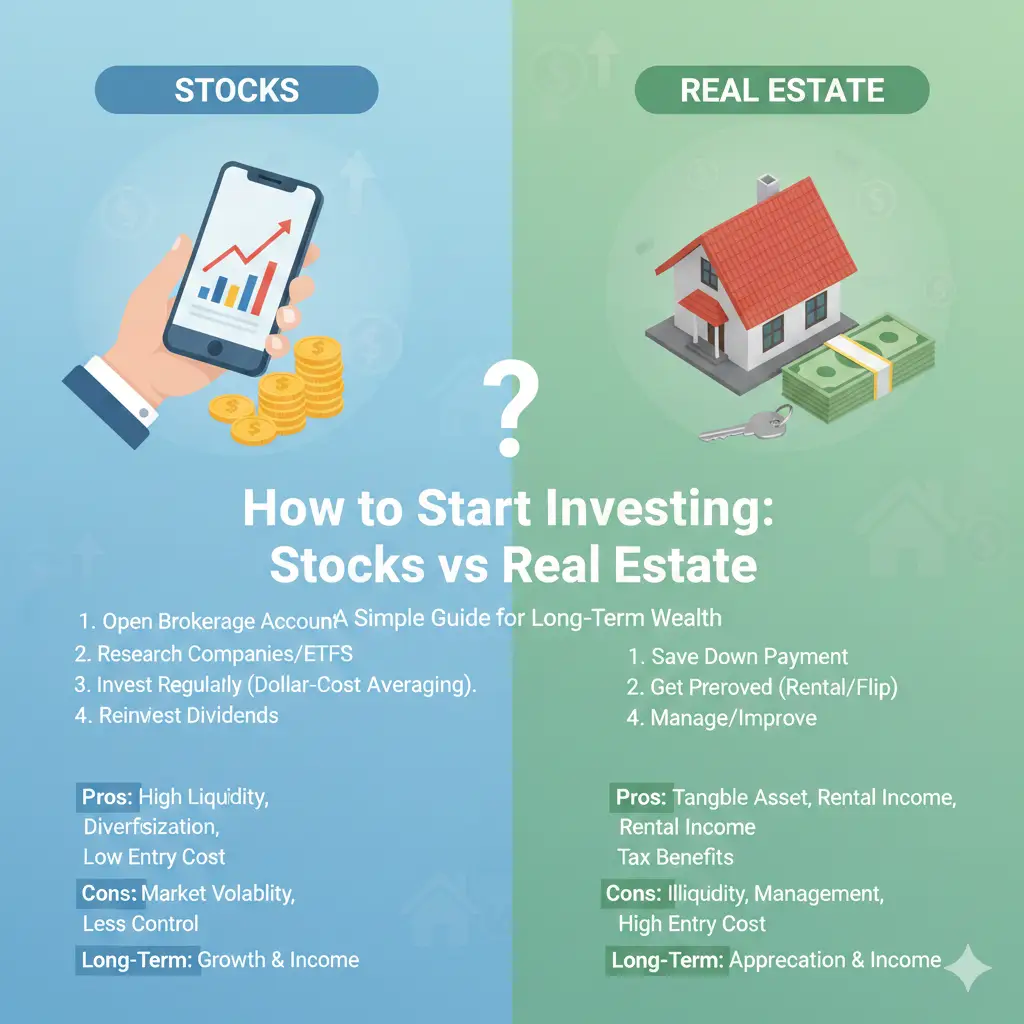
Investing for the first time can feel exciting but confusing. Two of the most loved ways to grow money are buying stocks and buying houses or buildings. Lots of new people ask: “Should I put my money in stocks or real estate to get rich slowly?” There is no one perfect answer—both are good, but in different ways!
Stocks can grow fast, but they jump up and down. Real estate gives steady rent money, but it takes more work. Smart people use a little of both, so their money stays safe and keeps growing.
This guide uses super-easy words and steps so anyone can learn how stocks and houses make money, which one is safer, and how to start today!
Why Think About Stocks and Real Estate Together?
Before you pick just one, most money experts say: use both! Put some money in stocks and some in houses or real estate.
Why?
- Stocks grow big and sometimes pay you a little bonus.
- Houses and real things keep your money safe when prices go up, and they give you steady money every month.
- When you mix them, your money jumps around less and feels safer.
A new 2024 study showed that people who had both lost 30% less money when everything got expensive! Allspring Global Investments – “Get Active1”
How to Start Investing in Stocks – The Simple Way
1. Understand What Stocks Really Are
When you buy a stock, you own a tiny piece of a real company. If the company grows, your share can grow too. Many companies also pay dividends income regularly.
2. Choose Between Picking Individual Stocks or Using Professionals
- Picking individual stocks yourself requires time, research, and emotional control.
- Most people grow their money better when real experts help pick the best companies every day.
These experts hunt for super companies that are cheap or really strong. Allspring calls this “Get Active.” Their smart teams look all over the world for the best chances, even when the market is jumping around or feels scary.
3. Open an Account and Start Small
- Open a brokerage account (many have $0 minimum now).
- Start with as little as $100 in an ETF or mutual fund.
- Set up automatic monthly investments—this uses long-term compounding without thinking.
4. Focus on Long-Term Investment Planning
The stock market has returned about 10% per year on average over the last 100 years (before inflation). Staying invested for 10+ years dramatically reduces the chance of losing money.
How to Start Investing in Real Estate – Without Buying a House
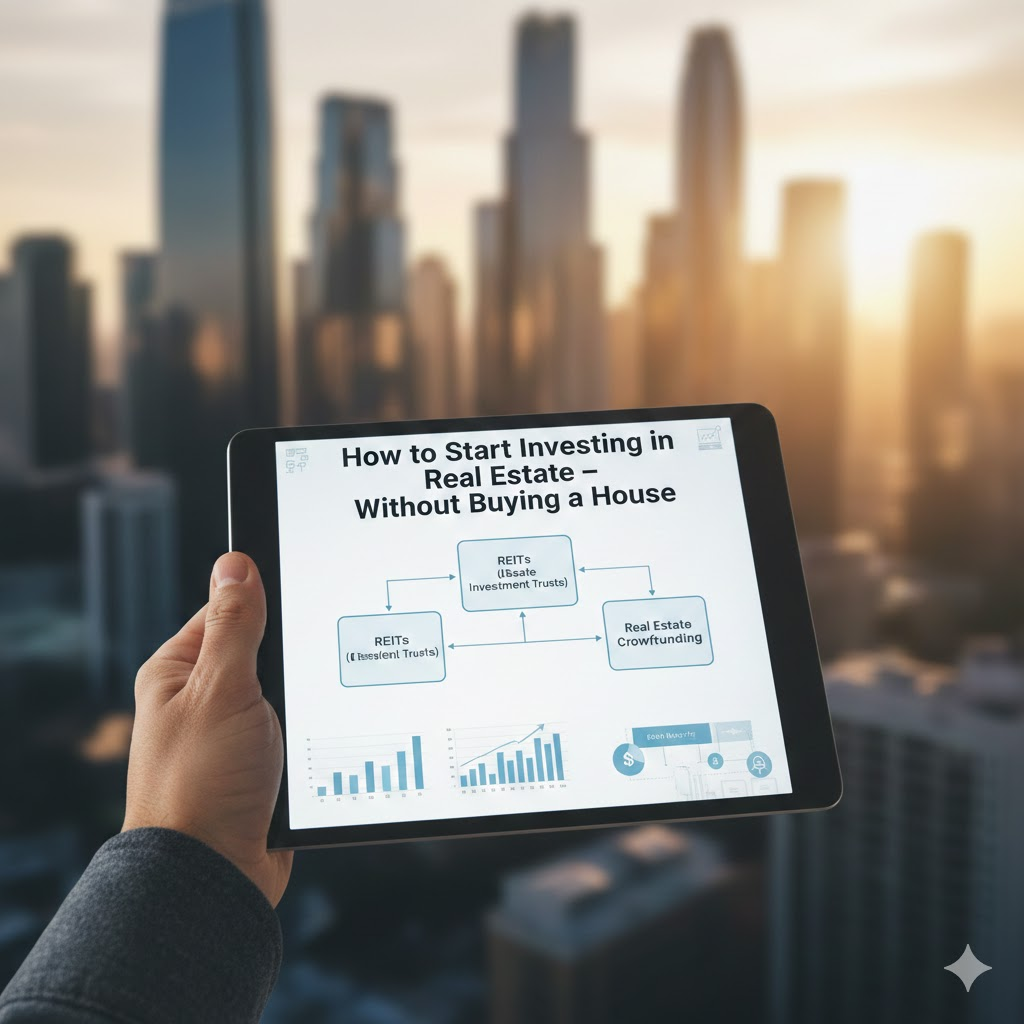
Many people think real estate investing means saving for a down payment and becoming a landlord. That works, but it is slow and needs a lot of money. Luckily, there are easier ways in 2025.
1. Use REITs (Real Estate Investment Trusts)
REITs are companies that own big properties (apartments, malls, warehouses) and pay you rent as dividends. You buy REITs exactly like stocks.
- Minimum investment: often $10–$50.
- High liquidity—you can sell anytime the market is open.
- Historical returns: 8–12% per year with dividends.
2. Try Real Asset ETFs for Even More Diversification
Some investors want more than just traditional real estate. The VanEck RAAX ETF gives exposure to:
- Real estate (via REITs)
- Commodities (gold, oil)
- Natural resources and infrastructure
This mix works as an inflation hedge investment because real assets often rise when living costs go up. VanEck RAAX Real Assets ETF2
3. Compare Physical Property vs REITs/ETFs
| Factor | Buying Physical Property | REITs or Real Asset ETFs |
| Starting money | $50,000–$200,000+ | $100–$1,000 |
| Time needed | High (repairs, tenants) | Almost none |
| Liquidity | Months to sell | Seconds |
| Diversification | One building, one city | Hundreds of properties globally |
| Inflation protection | Good | Very good (especially with RAAX) |
Stocks vs Real Estate Returns Over 10 Years – What History Shows
From 2014–2024 (including the COVID crash and recovery):
- U.S. stocks (S&P 500): ~13% annualized
- Global stocks (MSCI World): ~9–10%
- U.S. REITs: ~7–9% with dividends
- Direct residential real estate (Case-Shiller): ~6–8% plus rent
Stocks won on pure growth, but adding real estate lowered the wild swings. A simple 70% stocks / 30% real assets mix delivered nearly the same return as 100% stocks with much less stress.
Risk Comparison Between Stocks and Real Estate Investments
| Risk Type | Stocks | Real Estate (Physical) | Real Estate (REITs/ETFs) |
| Price drops | Can fall 50%+ quickly | Falls slowly | Falls with the stock market |
| Interest-rate risk | Low direct impact | Higher mortgage = lower demand | Sensitive (acts like stocks) |
| Management hassle | None | High | None |
| Inflation risk | Hurts if dividends don’t rise | Usually helps | Helps (especially real asset ETFs) |
How to Build a Simple Diversified Portfolio Today
Here is a beginner-friendly mix used by many financial advisors:
- 50–70% Active Equity Funds or global stock ETFs → Long-term growth + professional management (Example: Allspring “Get Active” strategies)
- 20–30% Real Asset / REIT ETFs → Inflation protection + monthly income (Example: VanEck RAAX or broad REIT funds)
- 10–20% Bonds or cash → Emergency safety net
Rebalance once a year. That’s it. IFM Investors Thought Leadership3
Which One Is Better for Passive Income?
- Dividend stocks + equity funds: 2–4% yield today, grows over time.
- REITs: 4–6% yield common, required by law to pay 90% of profits.
- Physical rental property: 5–8% net after expenses—if you manage well.
Winner for most people: REITs give the highest truly passive income.
Should I Invest in Real Estate or the Stock Market in 2025–2030?
Nobody has a crystal ball, but trends favor both:
- Stock markets reward companies solving AI, healthcare, and energy transitions.
- Real estate and infrastructure benefit from population growth, data centers, and inflation.
The safest answer is “yes to both”—just choose the easy versions (funds and ETFs) instead of doing everything yourself.
How to Start Investing in Stocks vs Real Estate With Only $500
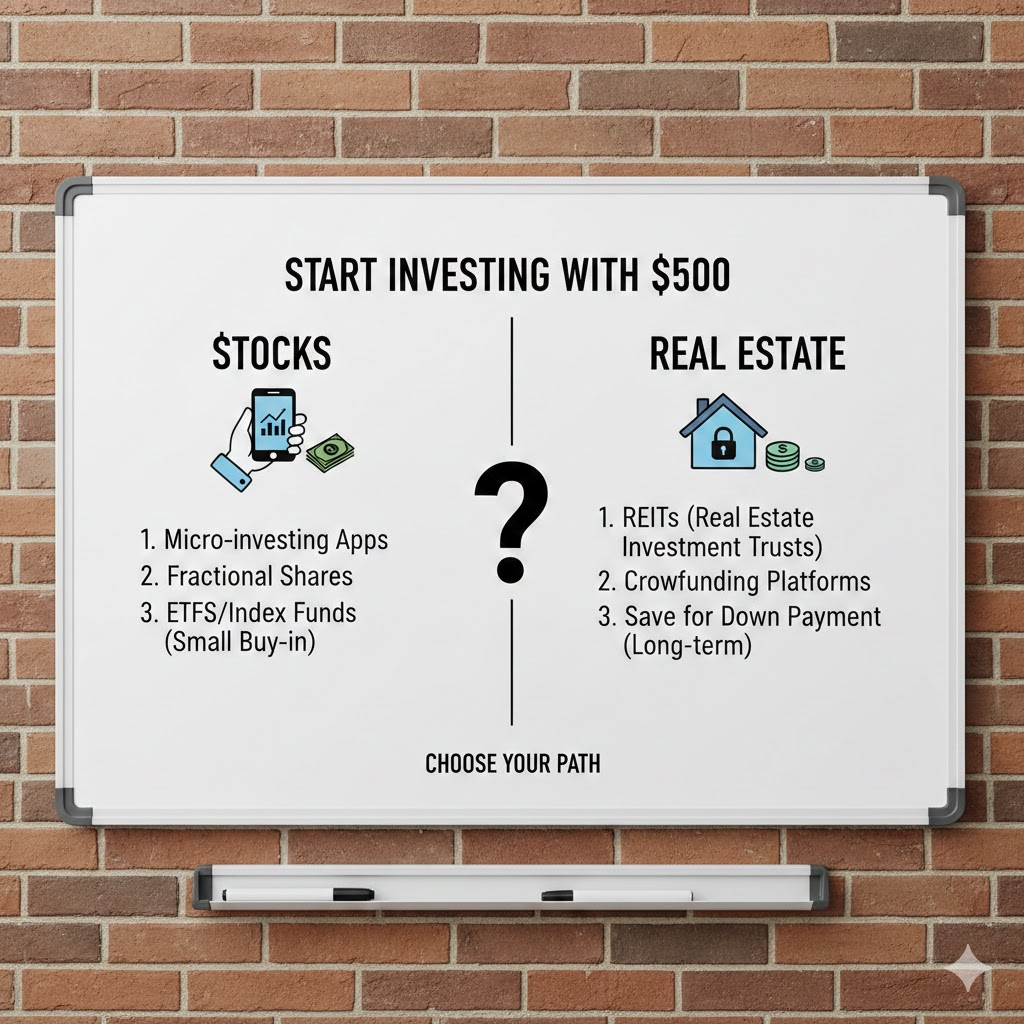
You do NOT need to be rich to begin.
Step-by-step plan:
- Open a brokerage account (Fidelity, Charles Schwab, Vanguard—many have $0 fees).
- Put $300 into a global stock ETF or active equity fund.
- Put $200 into a real asset or REIT ETF (example: VanEck RAAX).
- Turn on automatic $50–$100 monthly investments.
- Forget about it for 10 years.
That simple habit turns $500 into a real long-term wealth engine.
FAQs
Do I have to pick only stocks OR real estate?
No! Smart people use both together. Stocks help your money grow fast, and real estate gives steady rent money. Mixing them keeps your money safer and happier.
How much money do I need to start?
You can start with just $100 or $500! Use phone apps to buy tiny pieces of stock funds and REITs. Even $50 a month can grow big over time.
What are REITs, and are they good for beginners?
REITs are like buying little pieces of hundreds of buildings. You get rent money without fixing toilets or finding tenants. Yes – they are perfect and easy for new people!
Is it better to pick my own stocks or let experts do it?
Most beginners do better letting experts pick (called “active” or “index” funds). Allspring is one team that works all day to find the best companies. It’s like having a super coach for your money.
Will my money disappear if the market goes down?
It can go down for a little while, but if you wait 10+ years, it almost always comes back bigger. Mixing stocks and real estate makes the drops feel much smaller.
Conclusion
There is no need to pick one forever. The easiest and most powerful way for most people is to start both at the same time using low-cost funds and ETFs. Stocks (especially with active management) give you growth. Real estate and real assets (especially through REITs or funds like RAAX) give you income and inflation protection. Together, they create smoother, stronger long-term investment planning.
Start small, stay consistent, and let time do the heavy lifting.
References
- Allspring Global Investments – “Get Active” – Learn how real experts pick the best companies to grow your money. ↩︎
- VanEck RAAX Real Assets ETF – An Easy way to keep your money safe when prices go up fast. ↩︎
- IFM Investors Thought Leadership – Smart ideas from big money teams about mixing stocks and real things. ↩︎