
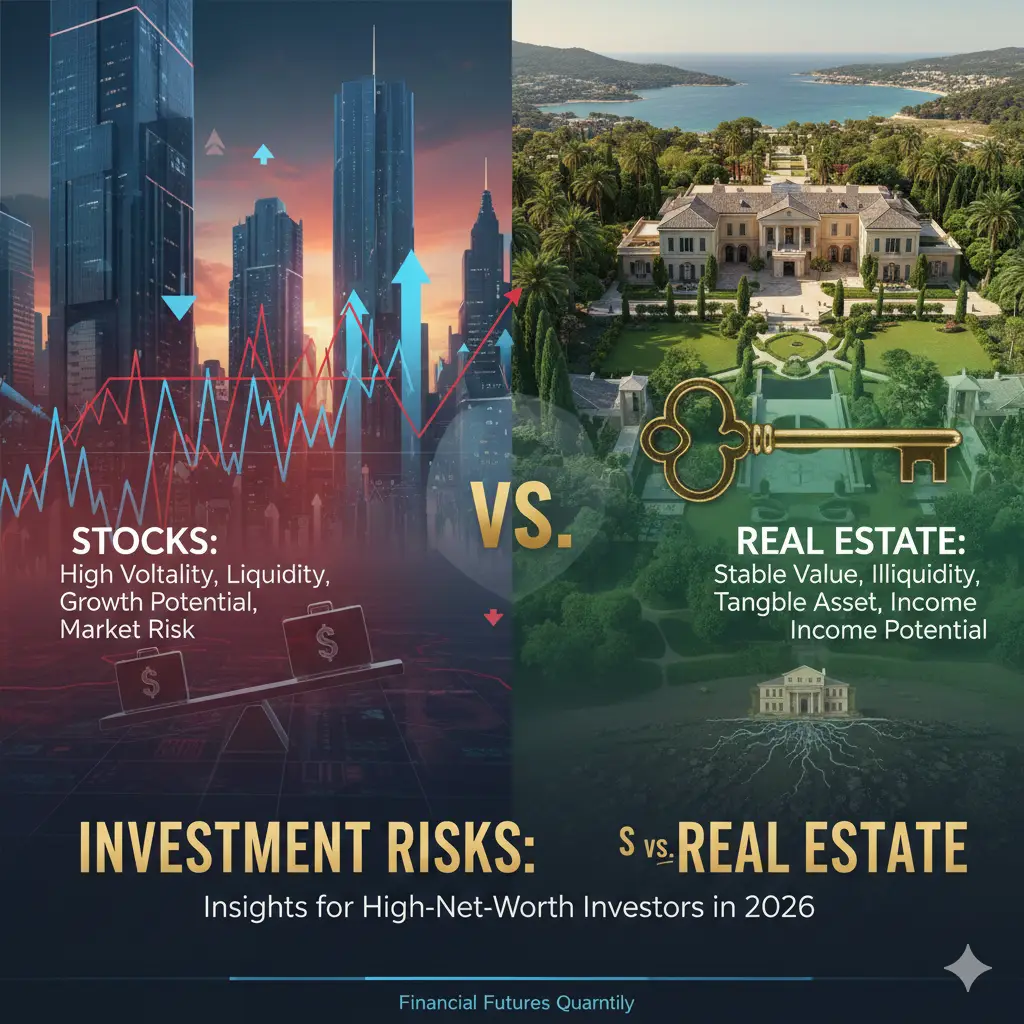
When you think about building wealth, choices matter. The risks of investing in stocks compared to real estate often come down to what keeps you up at night: wild swings in value or steady, predictable growth? Stocks can zoom up fast, but they crash hard too. Real estate, like a solid home, stands firm through storms. For accredited investors and high-net-worth individuals (HNWIs), this choice shapes your future. In this guide, we break it down simply. We look at dangers, perks, and smart moves for 2026. If you crave income-generating assets with less worry, keep reading.
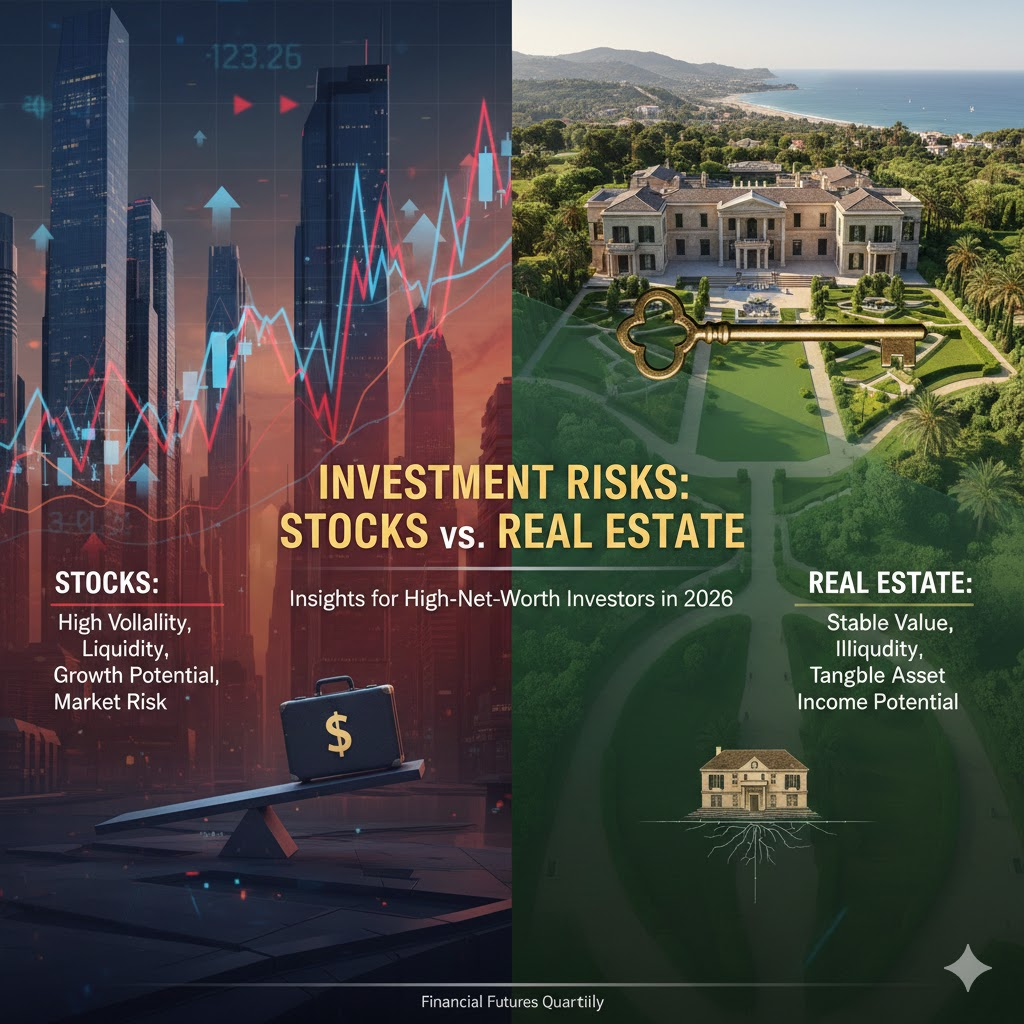
Why Choose Stability Over Speed?
Many folks chase quick wins in the market. But you? You’re here for the long game. Long-term oriented investors like you value stability and compounding from reliable sources. Stocks promise big pops, but real estate delivers calm waters. Think recurring cash flow from rents or dividends. That’s the draw for portfolio managers eyeing alternative investment opportunities in 2026.
Picture this: A market dip hits. Stocks tumble 20% in weeks. Real estate? It dips less, often bounces back with built-in hedges like rising rents during inflation. We’ll dive deeper, but first, let’s name the beasts.
Understanding the Risks of Investing in Stocks Compared to Real Estate
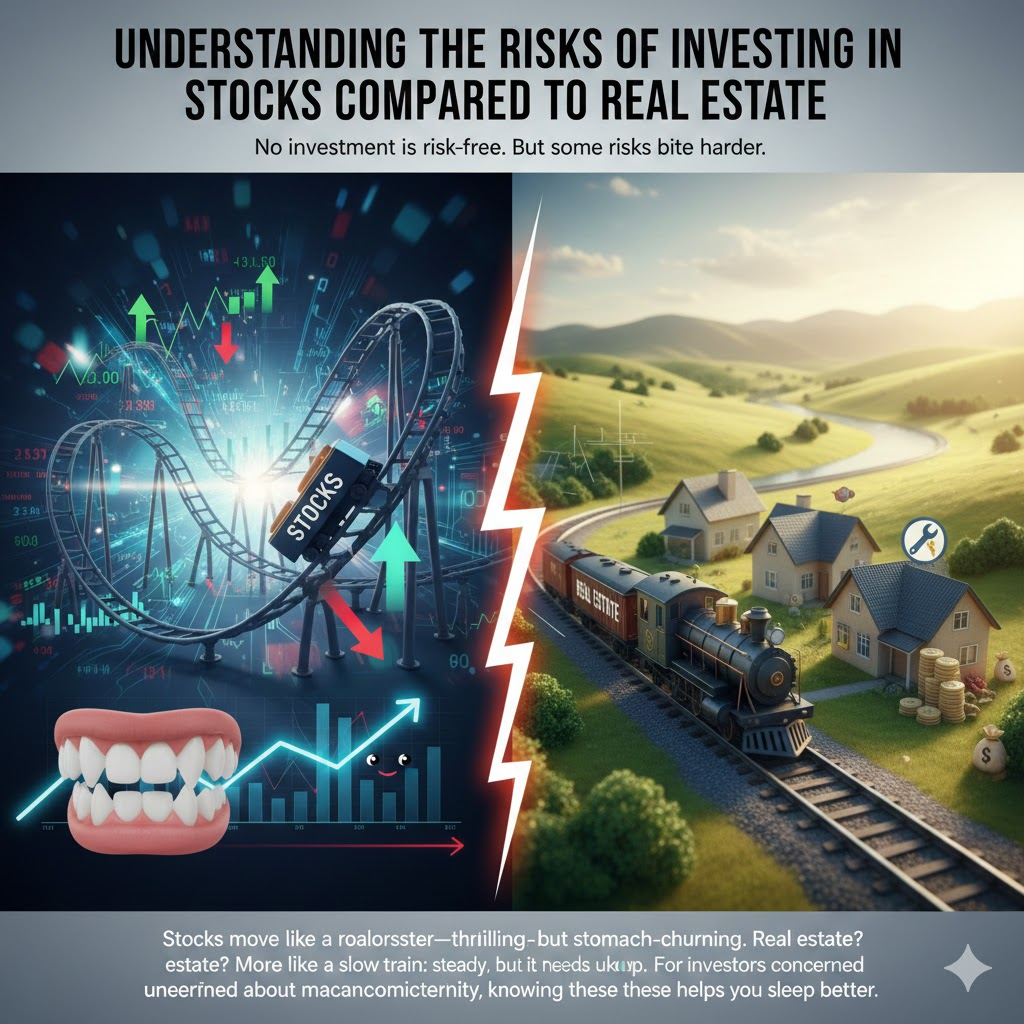
No investment is risk-free. But some risks bite harder. Stocks and real estate each have traps. Stocks move like a rollercoaster—thrilling, but stomach-churning. Real estate? More like a slow train: steady, but it needs upkeep. For investors concerned about macroeconomic uncertainty, knowing these helps you sleep better.
Key Risks in Stock Investing
Stocks grab headlines for sky-high gains. Yet, they pack punches too. Here’s a simple list of top dangers:
- Market Volatility: Prices swing wildly. In 2022, the S&P 500 dropped 19%. The stock market volatility 2026 forecast shows more bumps from geopolitics and AI hype. Expect 4-5% price wiggles even with 14% earnings growth.
- Economic Sensitivity: Jobs lost? Stocks tank. Recessions hit hard—think 2008’s 57% plunge. Stock market risk factors like interest hikes amplify this.
- No Tangible Control: You own shares, not assets. Company flops? Your stake vanishes. No hands-on fix.
- Inflation Erosion: Gains might not beat rising costs. Stocks lag in high-inflation spells.
- Emotional Traps: Fear sells low, greed buys high. Many bail at the bottom, missing rebounds.
These hit investors seeking income and diversification hate surprises. Equity market vs property investing often tips toward real estate for calm.
Risks in Real Estate Investing—But Why Less Scary?
Real estate isn’t perfect. But its risks feel tamer for the prepared. Property vs equity investment risk favors land lovers. Check these:
- Illiquidity: Can’t sell overnight like stocks. Takes months, fees eat chunks (5-6% closing costs).
- Upfront Costs: Big buys need cash or loans. High interest rates in 2025 sting, but 2026 eases with drops to 6%.
- Maintenance Hassles: Leaks, tenants—work piles up. But pros handle this for passive income through real estate.
- Local Market Swings: One town booms, another busts. Diversify to dodge.
- Leverage Perils: Debt amps gains—and losses. Smart borrowers win.
The edge? Real estate builds equity over time. Real estate inflation hedge shines here—rents rise with prices. For recession-resistant assets, it’s gold.
| Risk Factor | Stocks | Real Estate |
| Volatility | High (daily swings) | Low (quarterly changes) |
| Liquidity | High (sell anytime) | Low (months to close) |
| Income Predictability | Variable dividends | Steady rents/dividends |
| Inflation Protection | Moderate | Strong (rising values) |
| Recession Impact | Severe drops | Mild dips, quick recovery |
This table shows why diversified investment portfolio strategies blend both. But for low-risk fans, real estate leads.
Historical Performance: Real Estate vs Stock Returns
Numbers don’t lie. Over decades, real estate vs stocks returns paint a clear picture. Stocks win on raw speed. But real estate? It cruises with fewer crashes.
From 1994-2024, the S&P 500 averaged 10.3% yearly. Housing? 5-7%. Wait—stocks ahead! But factor volatility. Stocks’ standard deviation? 15-20%. Real estate’s? Half that.
In recessions, the gap widens. 2008: Stocks -37%, homes -19%. By 2012, real estate rebounded faster via rents. Which performs better during a recession, stocks or real estate? Land, hands down.
Comparison of stock return vs real estate return historical data from 30 years: Stocks 8.5% total, real estate 7.2%—but with leverage, RE hits 12%. Is real estate better than stocks for the long term? Yes, for steady builders.
Tips for you:
- Track 20-year charts—RE edges commercial at 9.5% vs S&P’s 9%.
- Add leverage wisely—borrow at 5%, earn 8%.
- Blend: 60% stocks, 40% RE cuts risk by 20%.
This history reassures long-term wealth-building investment seekers.
The Star of Recession-Resistant Assets
Want real estate without the drama? Enter self-storage investment advantages. It’s the quiet hero. Low upkeep, high demand, perfect for the economic cycle resilience of self-storage.
Why love it?
- Steady Demand: Moves, downsizes—life events fuel it. Even in slumps, folks store stuff.
- Low Costs: No fancy finishes. Margins hit 70%.
- Recession Proof: 2008 vacancy? Dropped 1%.Self-storage cash flow potential shines—monthly rents roll in.
For 2026, self-storage investment trends and market growth forecasts glow. Supply eases, rents up 3-5%. The market grows 7.5% in North America. Is self-storage real estate a good investment in 2026? Absolutely, for accredited investor opportunities.
If you are an accredited investor (that means you have good money and the rules let you buy special things), the smartest way is to join a fund, like the ones at Dahn Corporation.
Your money teams up with other rich people, so the fees are tiny, and they send you simple updates every 3 months. You do zero work, just collect money. Perfect for busy people who want to stay in vacation mode!
What the Experts Say: “Self-storage makes money in good times AND bad times, people always need a place to put their stuff.” That’s super true!
Self-Storage vs Regular Apartments Self-storage pays you 8–10% every year. Apartments usually pay only 6–8% and come with crying tenants, broken toilets, and late rent drama. Self-storage? Almost zero problems, just happy monthly checks!
REIT Investing Benefits: Easy Entry to Real Estate
Not ready for full properties? REIT investing benefits beckon. Buy shares like stocks, own buildings indirectly. Passive income through REITs flows as dividends, and 90% of the income is paid out.
Perks:
- Liquidity: Trade daily, unlike deeds.
- Diversification: Spread across malls, offices, and storage.
- Yields: 4-5% dividends, tops many stocks.
REIT dividends vs stock dividends: REITs mandate high payouts, less reinvested growth. Stocks? Variable, growth-focused. For REITs for retirement income, win.
In downturns, REITs dip less; the correlation to stocks is just 0.6. How to diversify portfolio with REITs and alternative assets: Aim for 10-20% allocation.
Events likeREITworld Conference network pros, catch trends on commercial property investing trends1.
REIT investing vs stock market investing for passive income: REITs edge for steady checks, stocks for pops.
Real Estate Market Outlook 2026: Brighter Than Stocks?
2026 shapes up kind. Real estate market outlook 2026 forecasts 1.2-4% home price rises. Listings up 8.9%, easing shortages. Rates dip to 5.5-6%.
Stocks? Bullish, S&P to 7,800, 14% gain. But the stock market volatility 2026 forecast warns of protectionism jolts.
Best investment strategy in 2026: stocks or real estate? Mix ’em. Property investment trends favor industrials like storage. Market performance comparison 2026: RE steadier.
For investing during high interest rates (fading), grab now. Safest long-term investments for wealth preservation 2026: RE funds.
Tips for HNWIs in 2026
- Scan Local: Pick growing areas—suburbs boom for storage.
- Leverage Pros: Advisors spot private real estate investment gems.
- Tax Perks: Depreciation shields income.
- Start Small: REITs test the waters.
- Monitor Cycles: Buy low, hold long.
These keep you ahead.
Building a Diversified Portfolio: Stocks, REITs, and Self-Storage
Real estate portfolio diversification is key. Don’t all-in one spot. Growth vs income investment strategies balance speed and safety.
Example: $1M portfolio. 50% stocks for growth, 30% REITs for income, 20% self-storage for hedge. In 2008, sim: Loses 15% vs stocks’ 40%.
Passive income options beyond stock dividends: Rents top ’em, predictable, inflation-tied.
Investing in alternative asset classes like storage adds resilience. Market downturn safe-haven assets? Storage and REITs.
For financial advisors and institutional investors, tools like how to diversify a portfolio with REITs and alternative assets simplify.
Rental income vs capital gains: RE gives both—cash now, growth later.
Real estate as a hedge against stock market volatility: Proven. Correlations low.
Benefits of Private Real Estate Funds Over Public Markets
Private real estate investment skips stock noise. Funds pool for big deals—storage complexes, say. Lower fees, higher nets (8-12%).
Vs public? Less daily drama, better tax flows.
For real estate investment opportunities for high-net-worth investors, these shine. Benefits of private real estate funds over public markets: Control, yields.
Long-term cash flow investments for retirement planning: Funds deliver.
Is Real Estate Better Than Stocks for Long-Term Wealth?
Short answer: For you, yes. Is real estate better than stocks for the long term? If stability trumps speed.
Capital appreciation investments in RE compound quietly. Add tax benefits—depreciation, 1031 swaps.
Financial freedom through property investing: Step by step, rents build nests.
Long-term cash flow investments for retirement planning: RE fits.
FAQs
What are the biggest risks of investing in stocks compared to real estate?
Stocks can crash super fast — one bad news day and you lose 20–30% in a week. Real estate drops slowly, and rent money still comes every month like a warm blanket. Rent is your soft pillow when stocks don’t have!
How does self-storage stack up in 2026?
Self-storage is one of the strongest picks in 2026, with about 7.5% growth. People always need space when they move or life changes; demand never stops. It’s the quiet superstar that keeps winning every year.
Are REITs a good passive income source?
Yes! Top REITs pay 4–6% and send money every 3 months with zero work. Way steadier than most stock dividends that can disappear. True mailbox money while you enjoy life!
Best way to start for accredited investors?
Jump into private funds made for rich people — like Dahn Corporation funds. Start with $50k–$100k, get monthly cash, big tax breaks, pros do everything. It’s the easy button for busy people who want great money without headaches.
Which wins in recessions?
Real estate wins every time! Stocks can lose 50% and take years to recover; good rentals or self-storage drop only 10–15% and bounce back fast.
Conclusion
The risks of investing in stocks compared to real estate boil down to thrill vs tranquility. Stocks sprint with sprints and stumbles. Real estate is like a slow, strong turtle. It keeps walking steadily even when everything else is jumping around. It gives you money every month while you sleep, and it makes your money grow over many years.
If you are a rich person who can buy special investments, two of the best toys are:
- Self-storage buildings (people pay rent every month to keep their stuff there).
- REITs (these are like owning little pieces of hundreds of buildings without any work).
Both of these keep paying you even when the economy gets sick. The rent from self-storage and the dividends from REITs are usually stronger and safer than the money you get from stocks.
In 2026, stocks will still bounce up and down like crazy. Real estate will shine bright and calm.
So the smart move is easy: don’t pick one, get both! That way, you get fast, fun money from stocks AND safe monthly money from real estate. Grab alternative investment opportunities in 2026, like private funds for income-generating assets. Your portfolio thrives on balance—not bets.