

If you’re just starting out as an investor, the world of money-making can feel overwhelming. You might wonder: Should you buy shares in a company or save for a rental property? That’s where Stocks vs Real Estate for Beginners 2025 comes in. This guide breaks it down simply, like chatting with a trusted friend who’s good with numbers.
In 2025, the economy shows steady growth. The stock market, tracked by the S&P 500, has averaged about 10% yearly returns over decades, though it dips and rises like ocean waves. Real estate, on the other hand, offers steady rental checks but needs more upfront cash. For newbies with limited funds, stocks shine because you can start small, think $100, while properties often demand thousands for a down payment.
This isn’t about picking one winner. Many smart folks mix both for balance. We’ll cover beginner investment strategies, pros and cons, and tips to build wealth without stress. By the end, you’ll know if dividend stocks vs rental income fits your life. Ready? Let’s dive in.
Understanding Stocks: The Easy Entry for New Investors
Stocks are shares in companies. When you buy one, you own a tiny piece of that business. If it grows, like tech giants in AI, you profit from rising prices or dividends (bonus cash payouts).
Why Stocks Appeal to Beginners in 2025
Young folks or those with small savings love stocks. No big loans needed. Apps like Robinhood let you buy fractional shares, so even pricey stocks like Amazon cost just $10 to start. In 2025, with AI and green tech booming, experts predict 8-12% growth in indexes like the S&P 500.
Here’s a quick list of stock investing tips for starters:
- Start with Index Funds: These track the whole market. Low fees, steady growth. Vanguard’s S&P 500 fund has returned 10.6% yearly since 1972.
- Diversify Early: Don’t bet on one stock. Spread across 10-20 via ETFs. This cuts the risk if one flops.
- Think Long-Term: Hold 5-10 years. Compounding turns $1,000 at 10% into $2,593 in a decade.
- Watch Fees: Pick zero-commission brokers. They eat returns otherwise.
- Use Tax Perks: Roth IRAs let gains grow tax-free. Great for long-term investment options.
Risk? Prices swing. In 2022, markets dropped 20%, but rebounded strongly by 2024. If volatility scares you, stocks might feel bumpy. But history shows patience pays.
Real-World Example
Meet Sarah, 28, a teacher in Toronto (Tier 1 city). She invests $200 monthly in an S&P ETF. After two years, her $4,800 grew to $5,300 despite dips. No landlord headaches, just app checks.
Demystifying Real Estate: Building Wealth Brick by Brick
Real estate means owning property. homes, apartments, or commercial spaces like self-storage. You earn from rent or selling later at a higher price.
Basics for Beginners
Direct buying needs cash: 20% down on a $300,000 condo? That’s $60,000 plus closing costs. But in 2025, with rates at 6-7%, it’s tougher for newbies.
Enter REITs: Funds that own properties. Buy shares like stocks. They pay 90% profits as dividends—think 4-6% yields. Perfect for a beginner guide to REITs and stock investing.
Real estate investment tips for 2025:
- Go Fractional: Platforms like Fundrise let you invest $500 in diversified properties.
- Focus on Stable Types: Self-storage booms. Demand up 4% yearly, low maintenance.
- Leverage Debt Wisely: Mortgages amplify returns. 20% down on a rental yielding 8%? Your cash-on-cash hits 30-40%.
- Hunt Tax Breaks: Deduct interest, depreciation. Up to $250,000 gains tax-free if primary home.
- Start Small: House hack—live in one unit, rent others. Builds equity fast.
Spotlight: Self-Storage Opportunities
In self-storage investment opportunities, returns shine. Average 10% cash-on-cash, beating stock dividends (3%). Why? Recession-proof—people store stuff during moves or downsizes. Dahn Corporation offers passive deals for accredited investors, blending stability with 8-12% yields. For beginners, REITs like Public Storage returned 11.6% over five years.
Stocks vs Real Estate for Beginners 2025: Head-to-Head Comparison
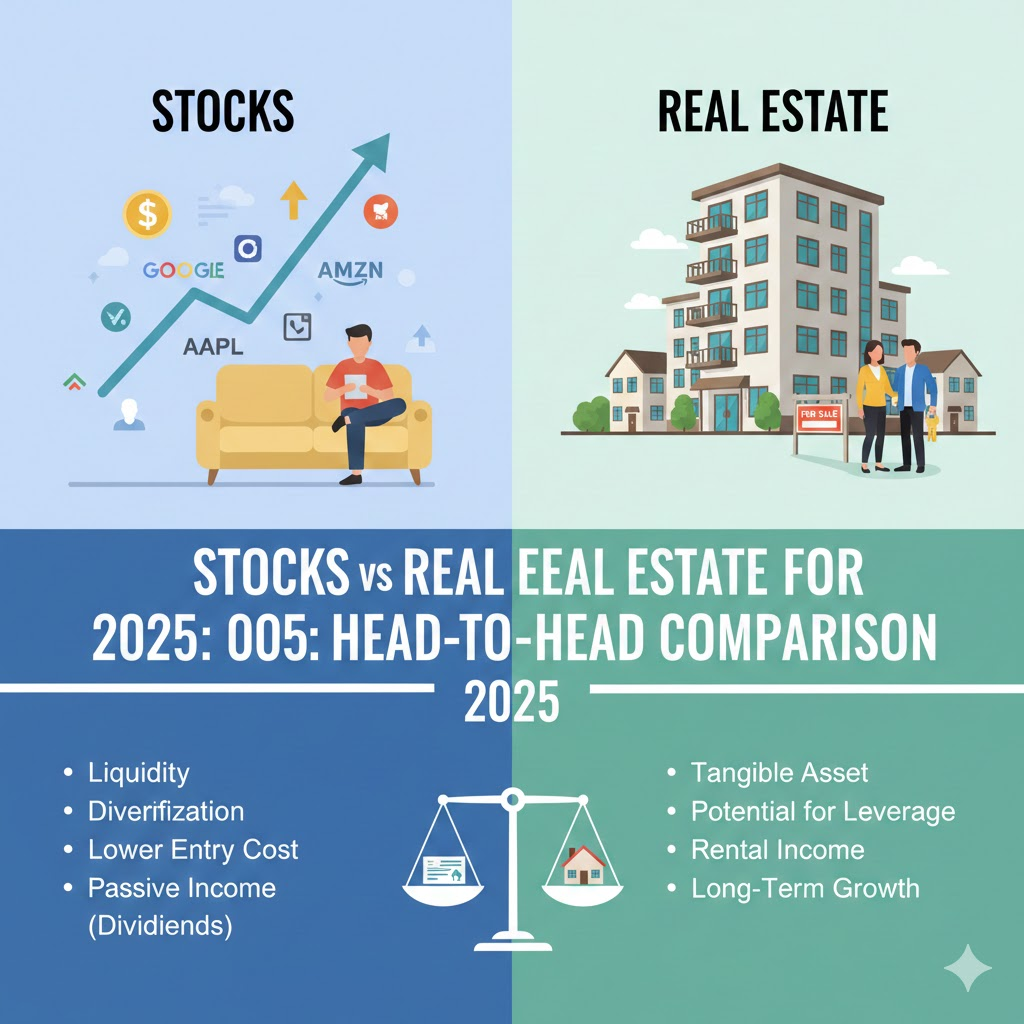
Time for the showdown. We’ll use tables and lists for clarity.
Returns: Who Wins Long-Term?
Stocks edge out with 10% average annual returns (S&P 500, 1926-2024). Real estate? 4-5% appreciation plus 3-5% rent, totaling 7-10%. But leverage boosts it—20% down turns 8% yield into 40% on your cash.
| Aspect | Stocks | Real Estate |
| Avg. Annual Return | 10% | 7-10% (with leverage) |
| 2025 Projection | 8-12% (tech-driven) | 3-5% appreciation + rent |
| Example: $10K Invested 10 Yrs | $25,937 | $19,672 (no leverage) |
Data from historical averages; past not guarantee.
Real estate vs stocks returns favor stocks for speed, real estate for steady flow.
Risk: Stability vs Swings
Stocks are volatile: 2025 YTD, S&P up 13.7%, but drops happen. Real estate steadier, hedges inflation—rents rise with prices.
Investment risk comparison:
- Stocks Pros: Diversify easily (ETFs). Low-risk investment strategies for new investors via a bond mix.
- Cons: Market crashes (2008: -37%).
- Real Estate Pros: Tangible, inflation hedge investments. Self-storage dipped just 1% in 2025 Q3.
- Cons: Local slumps (e.g., overbuilt cities).
For risk-averse beginners, blend: 70% stocks, 30% REITs.
Liquidity: Cash In, Cash Out
Liquidity of stocks vs real estate? Stocks win hands-down. Sell anytime, no fees. Properties? Months to close, 6% costs.
If you need money fast, like for emergencies, stocks fit people seeking flexibility and diversification.
Capital Needs: Start Small or Save Big?
Investment capital requirements are huge for direct real estate: $50K+ down. Stocks? $100. REITs? $500.
For young investors or those with limited capital, stocks or REITs vs direct property make sense. How to start investing in real estate with a small budget: Crowdfund via Fundrise.
Effort: Hands-Off vs Hands-On
Property management vs stock trading: Stocks are passive—set and forget. Real estate? Tenants, repairs. Outsource via REITs or managers (10% rent fee).
Tip: Beginners, pick passive. Time is money.
Taxes and Perks
Tax benefits of real estate: Deduct everything—interest, repairs. Stocks: Long-term gains 15%, dividends taxed.
Both are great for passive income investments. Dividend stocks vs rental income: Dividends quarterly, rent monthly.
Pros and Cons of Stocks vs Real Estate for Beginners
No perfect choice. Here’s the breakdown.
Stocks: Quick and Flexible
Pros:
- Easy Access: Start today, no credit check.
- High Liquidity: Sell fast.
- Diversification: One fund covers thousands of companies. Key for portfolio diversification strategies.
- Growth Potential: Compounding magic. $5K at 10% yearly? $13K in 10 years.
Cons:
- Volatility: Heart-stopping drops.
- No Control: Can’t influence the company.
- Emotional Traps: Panic selling hurts.
Real Estate: Steady and Tangible
Pros:
- Income Stream: Monthly rent covers bills.
- Appreciation: Values up 3% in 2025.
- Leverage: Borrow to buy big.
- Tax Wins: Tax benefits of real estate save thousands.
Cons:
- High Entry: Saves take years.
- Illiquid: Stuck if needed.
- Workload: Unless REITs.
For equity vs property investments, stocks for growth, and property for income.
Quote from expert Doug Kinsey: “Real estate’s leverage and taxes beat stocks sometimes, but numbers don’t tell all, consider your life.”
REITs: The Best of Both Worlds for Newbies
Can’t afford property? REITs vs direct property solves it. REITs own malls, apartments, and storage, and pay dividends like stocks.
In 2025, REITs averaged 4.5% YTD, beating direct in liquidity. Self-storage REITs? 13.3% in August 2024 alone.
Beginner’s guide to REITs and stock investing:
- Pick Types: Equity (own properties) or mortgage (loans).
- Buy ETFs: VNQ tracks all REITs, low fee.
- Aim for Yield: 4-6%, plus growth.
Pros: Passive, diversified. Cons: Market-tied volatility.
Example: Extra Space Storage REIT yields 4.2%, up 21.5% in 2024.
For self-storage vs stock market returns 2025, storage edges with 10%+ cash flow.
Should Beginners Invest in Stocks or Real Estate in 2025? Personalized Advice
It depends on you.
- Limited Capital/Flexibility Seekers: Stocks or REITs. Beginner-friendly investments like index funds.
- Risk-Averse, Growth-Minded: Real estate for stability. Low-risk investment strategies for new investors via self-storage.
- Affluent/Accredited: Direct deals like Dahn Corporation’s self-storage1. Passive, 8-12% returns.
- Long-Term Builders: Mix. 60/40 stocks/real estate hedges inflation.
Pros and cons of stocks vs real estate for beginners:
| Factor | Favoring Stocks | Favoring Real Estate |
| Start Cost | Low | High |
| Income Type | Growth/Dividends | Rent/Appreciation |
| Risk Level | High Volatility | Medium Stability |
| 2025 Edge | Tech Boom | Rate Cuts |
Stocks vs real estate for passive income: REITs bridge both.
Actionable: Assess risk tolerance. UseNerdWallet’s calculator for projections2.
Portfolio Diversification Strategies: Don’t Put All Eggs in One Basket
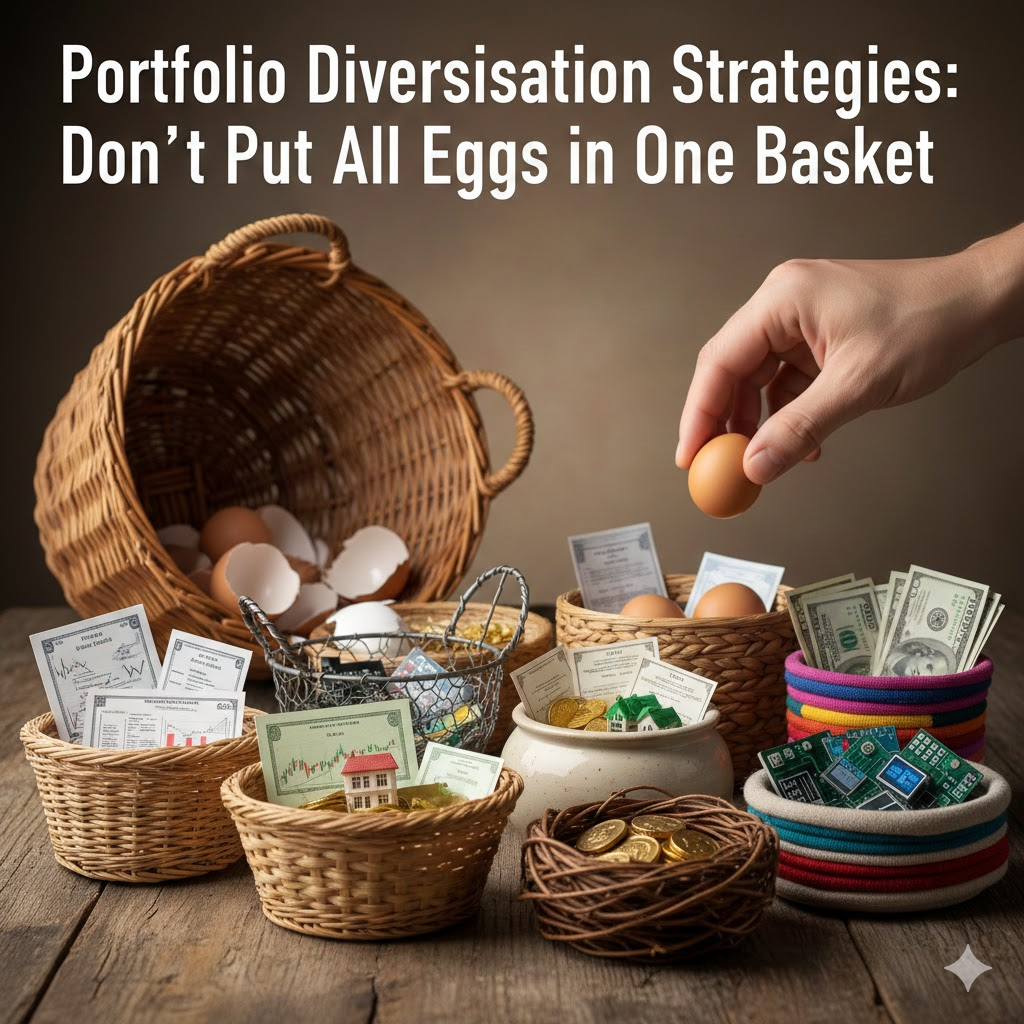
Portfolio diversification strategies are key for beginners. Why? One bad year in stocks? Real estate cushions.
Tips:
- Asset Mix: 50% stocks, 20% REITs, 20% bonds, 10% cash.
- Sector Spread: Stocks in tech/health; real estate in storage/residential.
- Rebalance Yearly: Sell winners, buy laggards.
- Global Touch: Add international ETFs.
- Tools: Apps like Wealthfront automate.
Benefits: Cuts risk 30% without losing returns.
For comparing liquidity and risk of stocks and real estate, diversified portfolios sleep better.
Real Estate Investment Tips for Beginners 2025: From Zero to Hero
Ready for property? Real estate investment tips for beginners 2025:
- Budget Check: Save 3-6 months’ reserves.
- Location Hunt: Growing suburbs, not hot cities.
- Finance Smart: FHA loans for first-timers, 3.5% down.
- Passive Path: Join syndicates for self-storage.
- Track Metrics: Aim 1% rule—rent 1% of purchase price monthly.
Example: $200K duplex, $800 rent/unit. Covers mortgage, profits $400/month.
Stocks vs real estate for passive income: Rentals win for cash flow, but REITs are easier.
Beginner Investment Strategies: Building Habits That Last
Beginner investment strategies focus on the basics.
- Emergency Fund First: 3-6 months’ expenses.
- Automate: Dollar-cost average—invest a fixed monthly amount.
- Learn Free: Khan Academy courses.
- Track Progress: Apps like Mint.
- Avoid Fads: Stick to long-term investment options.
In 2025, the best investment options for beginners 2025 include target-date funds.
Inflation Hedge Investments: Protecting Your Gains
Both assets fight inflation. Stocks via earnings growth; real estate via rising rents/values.
Inflation hedge investments: Real estate up 1% over CPI long-term. Stocks match 7% real return.
FAQs
What is easier to start in 2025: stocks or real estate?
Stocks are way easier! You can start with just $10 or $100 using phone apps. Real houses need many thousands of dollars, but REITs let you start with $500.
Can I invest if I don’t have a lot of money?
Yes! Buy tiny pieces of stocks or REITs. Even $50 a month can grow big over time because of magic compounding.
Which makes more money: stocks or real estate?
Over many years, stocks grow about 10% a year. Real estate grows 7–10% plus rent money. With smart borrowing, real estate can feel bigger, but stocks are faster for small starters.
What are REITs, and why are they good for beginners?
REITs are like buying a piece of many buildings with stock money. You get rent checks without fixing toilets! Perfect for new people who want house money without the work.
Is the stock market too scary because it goes up and down?
It does jump around, but if you keep money in for 5–10 years, it almost always goes up. Just don’t look every day and don’t sell when it’s down.
Conclusion
Wrapping up stocks vs real estate for beginners 2025, neither is “best”; it’s about fit. Stocks offer quick starts, liquidity, and growth for the young or cash-strapped. Real estate brings stability, income, and hedges via REITs or direct buys like self-storage. Diversify for wins: Use stocks for speed, property for steadiness.
In 2025, with markets up and rates easing, start small. Build habits, learn as you go. You’ve got this. Wealth waits for action-takers.