
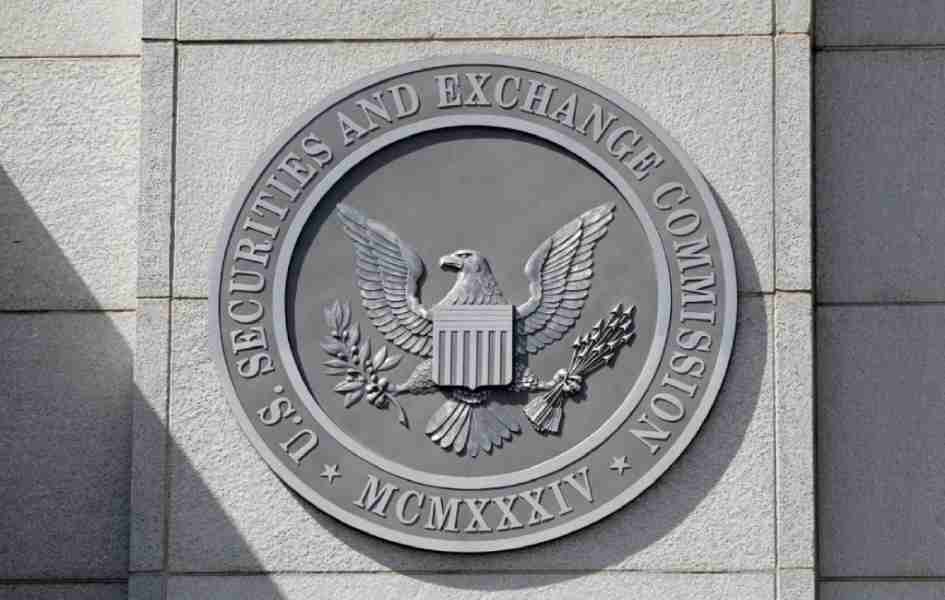
The Enhancement And Standardization Of Climate-Related Disclosures For Investors was a big SEC rule from 2024. It aimed to make companies share clear info on climate risks. Like how weather changes affect money. Or gas emissions. But in 2025, the SEC stopped fighting for it. Lawsuits won. The rule is now gone. This guide tells the story. We look at why it started. What it asked for. And what happens now. Companies still share some info. But not as strict. Investors need good data to pick stocks. Climate risks can hurt profits. Like floods or new laws. The rule wanted standard reports. Easy to compare. Now, states and other rules fill the gap.
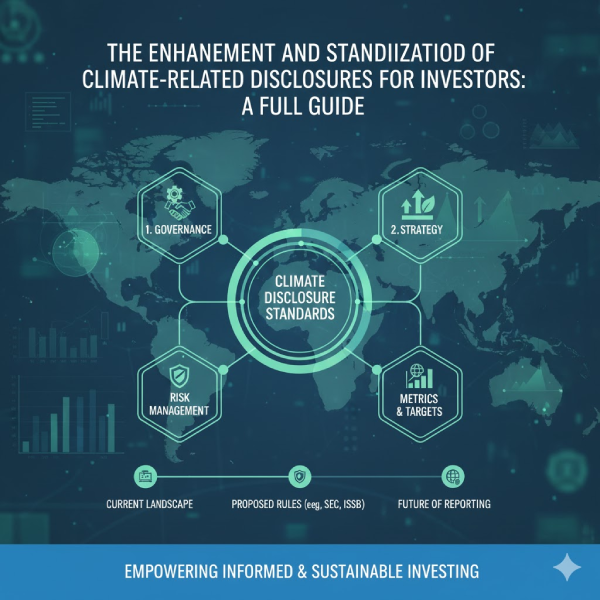
Background of The Enhancement And Standardization Of Climate-Related Disclosures For Investors
The Enhancement And Standardization Of Climate-Related Disclosures For Investors came from SEC worries. Old reports were messy. Companies shared different facts. Some hid risks. Investors could not compare easily. In 2022, the SEC asked for ideas. Many said yes to standards. Like the TCFD framework. It guides on risks and chances. The SEC used that. The rule covered public firms. They file with the SEC. Like big stocks. It asked for climate risks in reports. Physical like storms. Or transition like new green laws. Also, gas emissions. Scope 1 direct. Scope 2 power use. Scope 3 supply chain if big. Money impacts too. Like costs from weather. Board watch on climate. And goals if set. Like net zero. The goal was trust. Better choices for money. But groups sued. Said too hard. The cost is high. In 2025, the SEC gave up defense. Rule dead. But the idea lives on. Europe has strong rules. The US may try again.
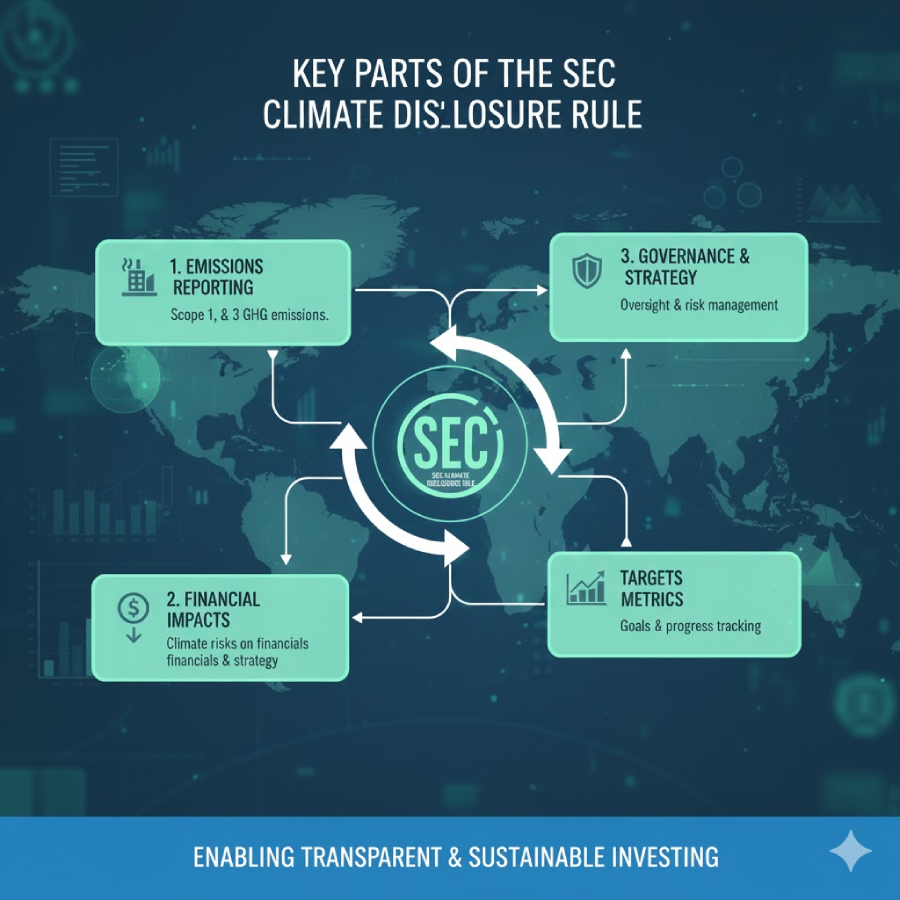
Key Parts of the SEC climate disclosure rule
The SEC climate disclosure rule had main tasks. First, risk info. How climate hurts biz. Short and long term. In 10-K reports. Second, gas data. Scope 1 and 2 always. Scope 3 if material. Big impact. Third party check for truth. Third, money effects. Costs over $500K from weather. Like fires or floods. Fourth, board role. Who watches the climate? Skills they have. Fifth, targets. If you set green goals. Share progress. Safe harbor for forward looks. No sue if wrong but honest. Standardized ESG reporting was the goal. Same format all. Easy read. But small firms less. Phase in over years. Big first in 2025. Others later. Costs $490K first year. Then $150K. Benefits more info. Better prices. But lawsuits said oversteps. No clear law. The court paused. SEC quit fight 2025. Rule gone.
Impacts on Climate risk disclosure for investors
Climate risk disclosure for investors helps smart picks. With rules, data is the same. Compare Apple to Exxon easily. See who is ready for the green shift. Without, info spotty. Some share lots. Others little. Investors guess. Risk bad bets. Investor-focused climate disclosure builds trust. Shows companies care about the planet. Draws green money. Like ESG funds. Trillions big. No rule, states step up. California asks for emissions. New York too. Global rules like EU push. US firms follow for world biz. Impacts positive long. More open. But a short mess. No fed standard. Patchwork laws. Hard for big firms. Investors use other tools. Like CDP data. Or SASB standards. Still get facts. But not all the same.
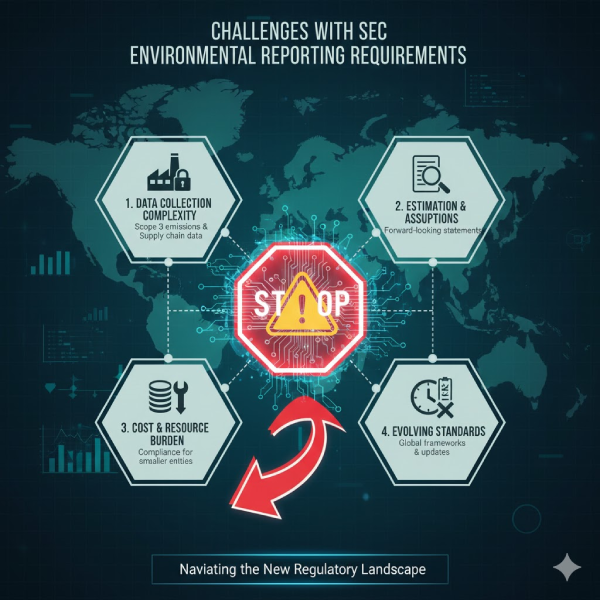
Challenges with SEC environmental reporting requirements
SEC environmental reporting requirements face hurdles. First, the cost is high. Collect data hard. Track Scope 3 chain. Suppliers many. Second, legal fights. Groups say the SEC has no power. Climate not finance. Won in court. Third, data truth. Who checks emissions. Auditors are new to it. Errors possible. Fourth, global mix. US rules like TCFD. But ISSB differs. Firms do double work. Fifth, small firms hurt. Less staff. Big cost hit. Sixth, privacy. Share plans. Rivals see. Seventh, change fast. New tech. Rules are old and quick. Corporate climate reporting standards need updating. No rule, voluntary growth. But less force. Challenges push better tools. Like AI track emissions.
Benefits of Corporate climate reporting standards
Corporate climate reporting standards give gains. First, better choices. Investors see risks. Pick safe stocks. Second, low cost money. Green firms borrow cheap. Third, be ready for laws. Like carbon tax. Plan ahead. Fourth, trust me. Customers like green. Sales grow. Fifth, innovate. See chances. Like the solar shift. Sixth, compare easily. Benchmarks help. Seventh, global edge. Meet EU rules. Sell more. ESG disclosure regulations push this. Even no SEC rule. Market wants. Funds demand. Trillions flow green. Benefits long term. Planet and profit.
Current Status in 2025 for Climate-related financial disclosure rule
Climate-related financial disclosure rules ended 2025. SEC quit defense March. Court case won against. Rule paused since 2024. No force now. But ideas stay. Companies share voluntarily. Like in 10-K. States like CA require emissions. From 2026. Big firms. Feds may try a new rule. But slow. Trump talks less reg. SEC S7-10-22 rule history shows push back. Started proposal 2022. Final 2024. Dead 2025. Status watch. Check the SEC site. Or news.
Tips for Compliance with Investor guidance on SEC climate and ESG reporting requirements
Investor guidance on SEC climate and ESG reporting requirements helps prep. First, know the risks. Physical and transition. Use the TCFD guide. Second, track emissions. Tools like Carbon Trust. Third, board the train. Add climate experts. Fourth, report clearly. In filings. Fifth, check data. Auditor help. Sixth, set goals. Net zero plan. Seventh, watch laws. State and global. Best practices for compliance with SEC climate disclosure rules follow even no rule. Good for biz.
Frequently Asked Questions
What is The Enhancement And Standardization Of Climate-Related Disclosures For Investors?
The Enhancement And Standardization Of Climate-Related Disclosures For Investors was SEC rule S7-10-22. Adopted March 2024. Asked companies share climate risks. Emissions too. In reports. Goal standard info. Easy comparison. But lawsuits paused. SEC quit defense 2025. Rule dead. Started 2022 proposal. Final had Scope 1 2 emissions. Scope 3 if big. Money impacts. Board role. Phase in big firms first. Small later. Costs high. Benefits trust. Now voluntary or state rules.
What is the SEC climate disclosure rule status in 2025?
SEC climate disclosure rule dead in 2025. Voted end defense March. Court case against won. Paused since 2024. No force. Companies are free. But some share anyway. States like CA require from 2026. Emissions data. Global rules push. The EU is strong. The US may try. But reg less now. Watch the news. SEC site.
Why is Standardized ESG reporting important?
Standardized ESG reporting key for comparison. ESG environment social governance. Standard same format. Investors see clearly. Risks and chances. Like climate hurt profits. Or green wins. Important for funds. Trillions green. Companies get better loans. Trust up. No standard mess. Hard choices.
What are Climate risk disclosure for investors benefits?
Climate risk disclosure for investors gives a clear view. See storms or laws hurt. Pick safe stocks. Benefits long returns. Companies plan better. Fix risks early. Save money. Market fair. Prices are right. Green shift ready.
How to follow SEC environmental reporting requirements now?
SEC environmental reporting requirements gone 2025. But voluntary good. Use TCFD. Report risks emissions. In 10-K. Track data. Tools help. Board watch. Set goals. Watch state laws. Prep global.
Conclusion
The Enhancement And Standardization Of Climate-Related Disclosures For Investors aimed better info. But it ended in 2025. History from 2022 to dead rule. Ideas live. Use voluntary standards. Stay ahead.What do you think about The Enhancement And Standardization Of Climate-Related Disclosures For Investors? Share thoughts.
References
- Proposal discussion at Harvard Corp Gov: The Enhancement and Standardization – early insights on rule.
- Final rule text from Federal Register: The Enhancement and Standardization – full details 2024.
- SEC official page at SEC: S7-10-22 – adoption and facts.